Two Easy Ways to Start Earning Rewards!
Earn 2X Pals Rewards points at Petco
when you use Petco Pay!
Get It Today
Learn how to setup your reptiles terrarium to ensure your reptile lives a wholesome & happy life. Shop at your local Petco for all reptile terrarium needs.
Updated on July 17th, 2026
When it comes to reptile habitats, one of the most essential elements to creating a happy home for your pet is including the appropriate type of lighting. Zoo Med helps outline which lights are right for your pet.
Updated on July 17th, 2026
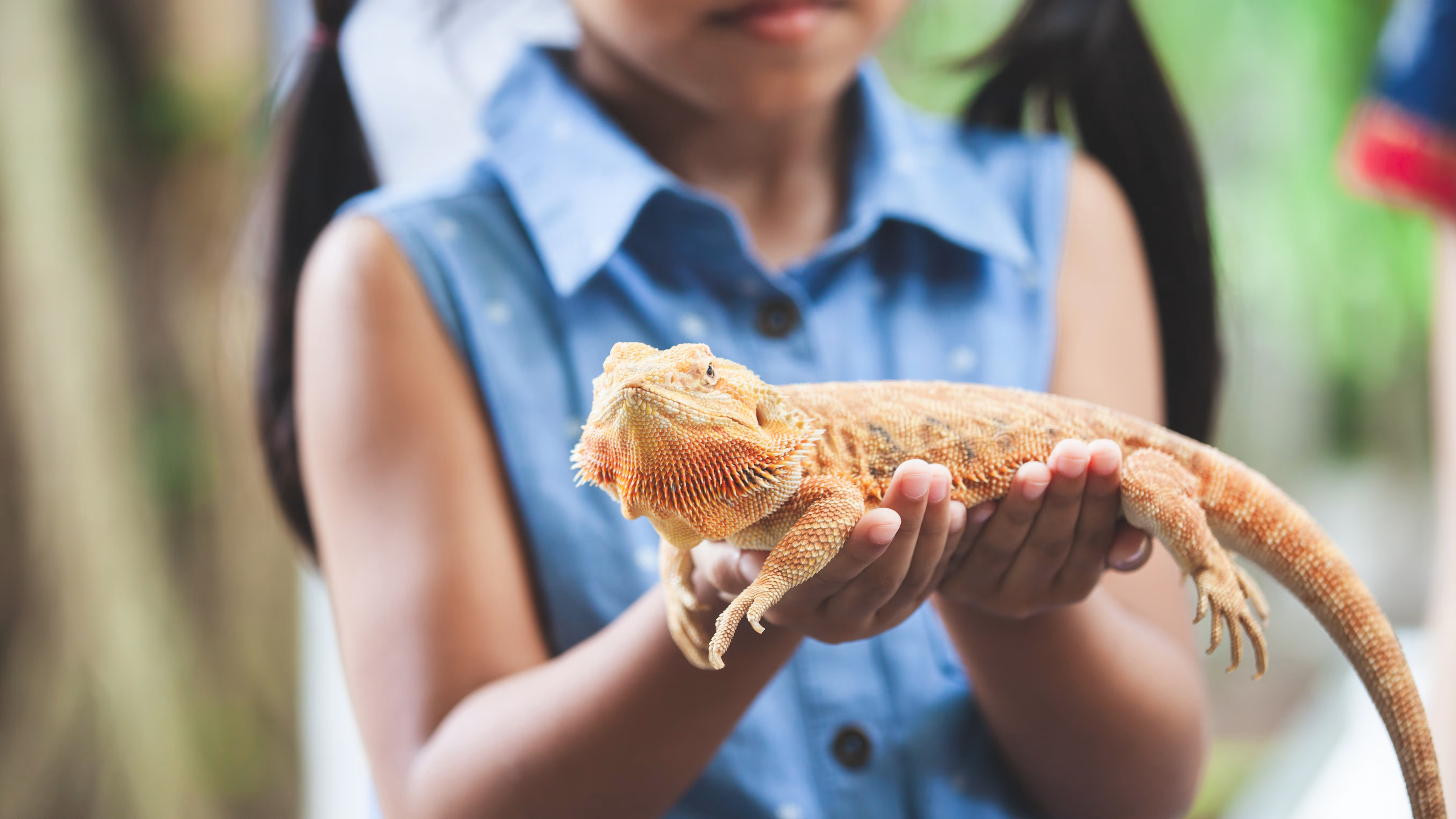
Read these guidelines about handling reptiles to provide a safe and fun environment for your pet, friends and family.
Updated on July 17th, 2026
Learn some tips and strategies that can be used to get your pet reptiles safely through a power outage regardless of the time of year.
Updated on July 17th, 2026
Whether you temporarily lose access to AC or are experiencing unexpected temperature changes, you can use these tips to keep your reptiles happy and healthy.
Updated on August 14th, 2025
Hi Katie. Any abnormalities you are seeing with Zillo should be checked out by your vet. I don't see anything outwardly abnormal based on those photos. Most health issues that we see in reptiles is due to improper husbandry (diet, lighting, housing, etc) so I suggest you check and make sure you are doing everything 100% correct. Here is a good reference for you to read about Beaded Dragon husbandry. I also suggest you get him an exam with a reputable reptile vet - he could have intestinal parasites causing that are causing his problems. ( http://www.reptilesmagazine.com/Care-Sheets/Lizards/Bearded-Dragon/ ) If you don't already have a vet that you use, I found this one in your area that will treat reptiles. ( http://applevalleyanimalhospital.com/wellness/avian-exotic/ ) Hope this helps. Best wishes.
Updated on September 24th, 2025
I think this may be a repetition of a previous question. This could be due to a bacterial or fungal infection causing scale rot. Swab the infected area with a diluted povidone-iodine solution twice daily. Scrape away the infected area gently with a blunt tool or a cotton pad. If this time of first line treatment does not help and you do not see any improvement in 48hours a check up at your local veterinarian would be required as antibiotic ointment and more aggressive treatment may be needed. Hope this answer was helpful, but please do not hesitate to contact us again on the forum or by requesting a consultation if you have any more questions or to discuss it any further. Please find the time to give us a feedback about the consultation as that will be used to improve our service.
Updated on September 24th, 2025
What you have appears to be an aquatic/semi-aquatic species of turtle. Basic requirements include a tank of at least 10 gallons initially, a water heater, a water filter, a basking area out of the water, a heat lamp and a UVB light source.
Updated on September 24th, 2025
Leopard geckos are great "starter" reptiles. They don't require special lighting (UVB) like other reptiles. A 20 gallon tank is big enough for one. Add a heat source, hides and a water bowl and you are good to go. You can review gecko care at the links below. http://www.reptilesmagazine.com/Care-Sheets/Lizards/Leopard-Gecko/ http://www.anapsid.org/leopardgek.html
Updated on September 24th, 2025
You must treat both the environment and the pet. You can try some over the counter products but many can be ineffective if the environment is not treated concurrently. Ivermectin can be dispensed by your veterinarian to use systemically or topically. Do not treat with ivermectin without the advice of your veterinarian as it is quite easy to overdose. A 30 minute soak in a diluted Betadine bath can remove most mites and may soothe irritated skin. Remove the substrate, bag it and take it outdoors. Clean and sanitize the cage, bowls and tank furniture. You can use hot, soapy water followed by a 1:30 dilution of bleach and water followed by a thorough rinsing on the tank, bowls and non porous surfaces. Discard anything that cannot be sanitized. You may need to clean and sanitize the enclosure weekly for several weeks. The pet may need multiple treatments as well.
Updated on September 24th, 2025