

Two Easy Ways to Start Earning Rewards!
Become a member today! Members-only pricing and offers, personalized care notifications, Vital Care points back on every purchase and more!
 Become a credit card member today!
Earn 2X Pals Rewards points at Petco
when you use Petco Pay!APPLY NOWLearn More About Petco Pay Benefits
SeaView
Get It Today


Related Articles & Questions
- Food & Nutrition
Worry-Free Fish Feeding: Vacation Sitters & Auto Feeder Guide
Do you have questions about feeding your fish while on vacation? Petco has the answers! Visit us to learn about fish dietary needs.
Updated on October 23rd, 2025
- Health & Wellbeing
Sick Fish? Dropsy, Swim Bladder, Popeye: Identify & Treat
Dropsy, Swim Bladder Disorder & Popeye are common illnesses in aquarium fish. Learn more about spotting the signs and treatment of these diseases.
Updated on October 23rd, 2025
- New Pet
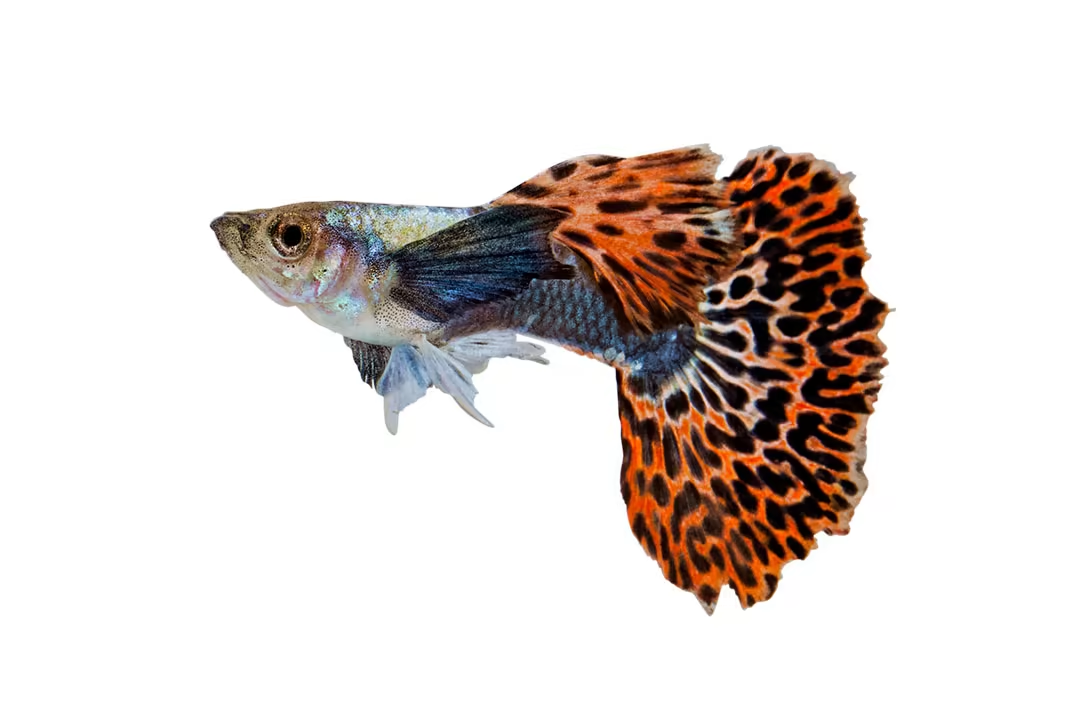
Beginner's Guide: Freshwater Livebearer Tank Setup, Food & Happy Fish
Learn how to care for freshwater livebearers, recommended diet & aquarium setup. Find the right food, supplies & equipment at your neighborhood Petco.
Updated on October 23rd, 2025
- New Pet
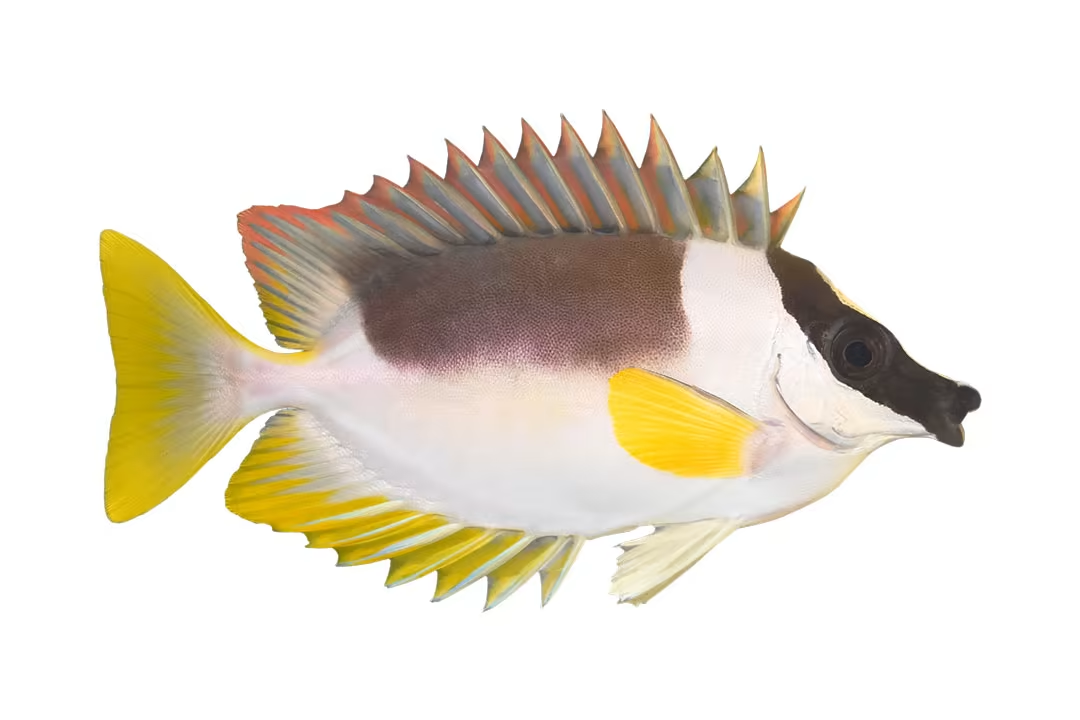
Foxface & Rabbitfish Care: Tank, Food, Compatibility, & Venomous Spines
Learn how to care for Foxface fish & Rabbitfish, recommended diet and aquarium setup. Find the right food, supplies and equipment at your neighborhood Petco.
Updated on October 23rd, 2025
- New Pet
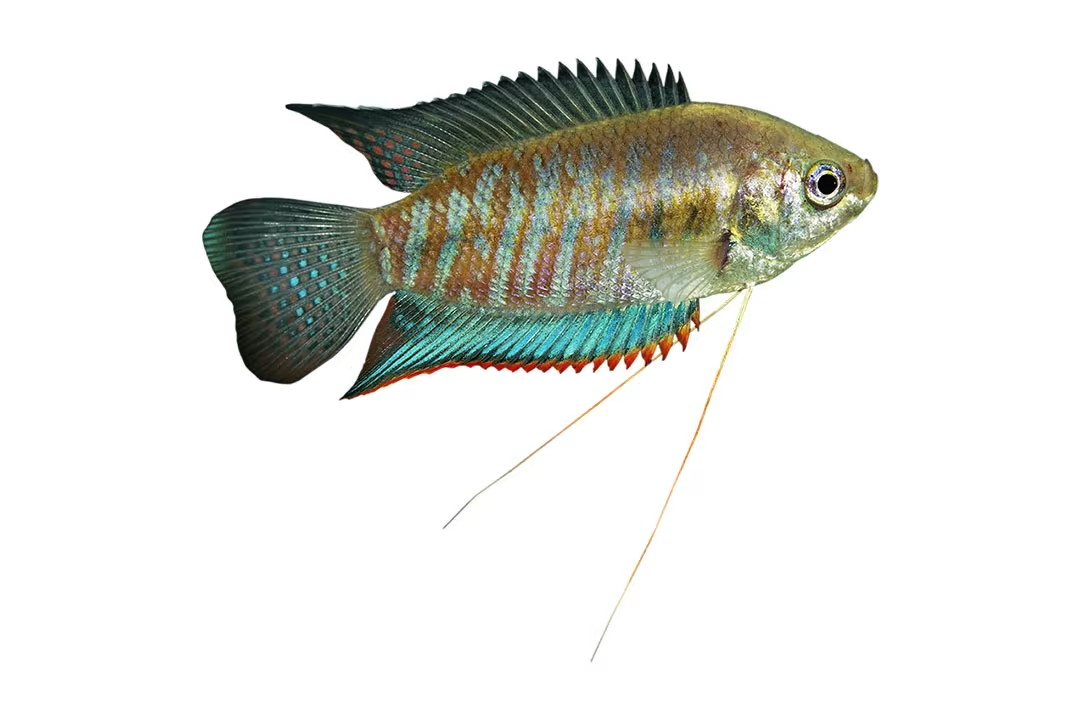
Paradise Fish Care: Complete Guide to Tank Size, Food, & Habitat Setup
Learn how to care for Paradise fish, recommended diet and aquarium setup. Find the right food, supplies and equipment at your neighborhood Petco.
Updated on October 23rd, 2025
- Health & Wellbeing
How would I transport a goldfish? I am going to college and it's at least a 6 hour drive and I am staying in a hotel for one night. How would you suggest I transport him without stress?
Hello and thank you for reaching out to Boop by Petco. Begin your preparation for the move a week or so before the day itself, by removing ornaments and other obstacles from within the tank. Each day leading up to the move, perform a 15-20% water change, so that by the time you are ready to move, the tank water will be clean but also stable and mature. On the day itself, preserve as much of the original tank water as possible, to re-introduce into the tank at the other end. The best way to transport your fish is within thick bags, like the ones pet shops provide when you buy new fish. Make sure that the top of the bag is well sealed to prevent spillages. Store the bags containing your fish in a sturdy box, padded with polystyrene or other filled bags to keep the bags secure and upright. Cover the box, as darkness helps to reduce stress in your fish, then secure the box safely within your vehicle. Since your journey is more than a couple of hours long then you may need to arrange for a
Updated on September 24th, 2025
- Health & Wellbeing
I got a fish from the fair. Its orange, gender unknown. What do I feed it for the meantime, and how do I take care of it so it doesn't die. It's current habitat is a plastic bowl with a lid, probably the size of the ones people get at petsmart. Pleas
It sounds like you need to take a trip to your local pet store. The clerks there can help you pick out an appropriately size tank with proper filtration and heating that can help keep Sushi healthy. They can also let you know what water treatments you'll need for the water in your area, as well as test any water you bring it to see if it is OK for Sushi to live in. Pet stores will also carry commercial goldfish food which is a balanced diet that is given to them. It should have feeding instructions on it so you know how much is appropriate to give to Sushi.
Updated on September 24th, 2025
- Health & Wellbeing
my dog as been having dry skin and i was told he should have fish in his food for the oils. i do feed him science diet but the do not have fish. what is a better alternative to change his food to that comes in fish?
Science Diet is an excellent food but as you have noticed their over the counter foods typically don't have fish. They do have a prescription diet with fish but it can be expensive. I included a couple links to a couple different types of food that contain Salmon. https://www.chewy.com/purina-pro-plan-focus-adult-sensitive/dp/128666 https://www.chewy.com/purina-one-smartblend-sensitive/dp/37688 Thank you for using Boop by Petco.
Updated on February 4th, 2026
- Health & Wellbeing
My rainbow albino shark is slow to grab the food...now it is a little bit inactive...is this a sign where in it is under nurish...?thank you for the reply already...bless you guys...
Unfortunately this is a very generic sign and a radical approach must be followed in these cases to find the problem. Begin by submitting a water sample for quality testing. Most pet stores will do this for free or a nominal fee. High ammonia levels, PH imbalances may be responsible for that. Oxygen concentration and quality of the filters should be determined as well. If water quality is good and there are no major imbalances, your Fishy should examined to look for any sign of bacterial/fungal infection and eventually water should be treated. Please do not hesitate to contact us again on the forum or by requesting a consultation if you have any more questions or to discuss it any further.
Updated on September 24th, 2025
- Health & Wellbeing
Hey! Just got a beta fish and he is swimming fine... but after I fed him, he seemed to “hyperventilate”! But then again, he’s swimming fine. Is this okay? He’ll also swim really fast at some points. Is he just nervous?
Monitor for redness, white spots or fuzzy growths on him. The swimming fast may be "flashing", which a fish with an infection will do to "scratch an itch". Maintain pristine water quality via filtration and partial water changes. Use only aged or conditioned water that is temperature matched to prevent stress or shock when performing water changes. Bettas do best between 78 F and 80 F. Monitor water chemistry to confirm 0 ppm ammonia and nitrites with nitrates at 320 ppm or less. If you don't have a home test kit, most pet stores will test water for free or for a small fee.
Updated on September 24th, 2025