Two Easy Ways to Start Earning Rewards!
Earn 2X Pals Rewards points at Petco
when you use Petco Pay!
Get It Today
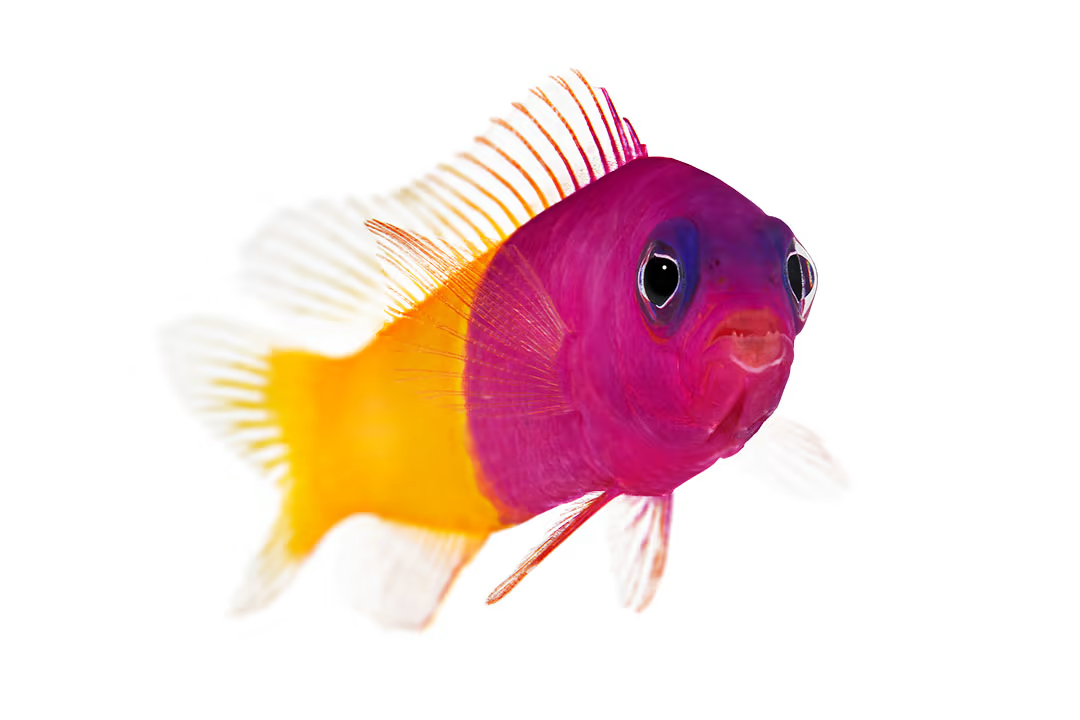
Small Marine Fish are favorites with marine aquarists and includes a wide range of species.
Updated on November 13th, 2025
Learn how to pick the right aquarium plants, substrate, lighting, and fertilizers to ensure that your aquarium plants thrive and stay healthy.
Updated on November 13th, 2025
Learn how to care for freshwater community fish, recommended diet & aquarium setup. Find the right food, supplies & equipment at your neighborhood Petco.
Updated on November 13th, 2025
Learn how to care for semi-aggressive fish, recommended diet & aquarium setup. Find the right food, supplies & equipment at your neighborhood Petco.
Updated on November 13th, 2025
Wondering why you may need CO2 in your fish aquarium? Learn the basics from a Petco aquatics specialist.
Updated on November 13th, 2025
Thanks for reaching out. If is a good idea to fast for 1-2 days prior to shipment, this decreased feces and will help to keep the ammonia down. Typically clear bags are utilized with about 50% water, and 50% air/oxygen used. A local pet store might be able to assist, as they get shipment in (so have older bags and boxes, which need to be disinfected) and hopefully the skills to ship. Check with the airline also, box needs to be well labelled "LIE ANIMALS" and "THIS END UP". Sometimes a health certificate for interstate travel is needed, so contact airline and State of Utah, veterinarian. Good luck.
Updated on August 12th, 2025
Check the water chemistry. Confirm ammonia and nitrite levels are 0.25ppm or less and nitrates are 40ppm or less. Use a liquid test kit or submit a sample for testing. Most pet stores or aquarists will do this for free or for a small fee. Partial water changes, about 30% can be done to decrease high levels. Use only aged or conditioned water that is temperature matched to prevent further stress or shock. My preferences for water conditioning are AmQuel Plus and NovAqua in addition to StressCoat. Confirm water temperature between 78F and 80F. You can soak pellets in some garlic juice to stimulate his appetite.
Updated on August 12th, 2025
It is no trouble at all. It is why we are here! The first thing to check would be water chemistry. This can be done using a home test kit or by submitting a water sample for testing. Most pet stores will do this for free or for a small fee. Aim for 0 ppm ammonia and nitrites with a nitrate level of 20 ppm or less. Perform a partial water change, no more than 30% total volume, daily to stabilize or improve water chemistry. Use only aged or conditioned water that is temperature matched to prevent stress or shock. The species of fish you have do best in the mid to high 70s F up to about 82 F. If you have a newly set up tank, it may not have cycled properly or adequately. This would have led to toxic levels of ammonia which likely killed your fish. A tank needs to run, without fish ideally, for 4-6 weeks to establish a Nitrogen Cycle. This time period allows beneficial populations of bacteria to colonize the substrate and filter media. These bacteria are responsible for breaking down ammo
Updated on August 12th, 2025
Hi, and thanks for your question. This is a quite generic presentation and a logic approach is needed. Begin by submitting a water sample for quality testing. Most pet stores will do this for free or a nominal fee. Clinical examination should always include a water quality check, even if you have done so already. Water testing should be performed with a quality test kit, measuring NH4, NO2 and NO3. High ammonia levels, PH imbalances may be responsible for these signs. Oxygen concentration and quality of the filters should be determined as well. If water quality is good and there are no major imbalances, your fish should get examined to look for any sign of bacterial/fungal infection and eventually water should be treated. Hope this answer was helpful, but please do not hesitate to contact us again on the forum or by requesting a consultation if you have any more questions or to discuss it any further. If this answer was helpful please let us know, this will be used to improve our servi
Updated on August 12th, 2025

The best you can do is to maintain pristine water quality and proper temperatures. If she is not a salt sensitive species, you can use plain aquarium salt (NOT table or Epsom salt) as a general tonic. It can reduce stress, improve gill function, treat minor infection/injury and aid in any recovery. Dissolve 1 teaspoon of salt pr gallon of water in a cup or two of tank water. Gently pour it into the tank. Treat for 14 days then reassess the condition. Perform partial water changes afterwards to reduce salinity. Use only conditioned water that is temperature matched to prevent further stress or shock.
Updated on August 12th, 2025