

Two Easy Ways to Start Earning Rewards!
Become a member today! Members-only pricing and offers, personalized care notifications, Vital Care points back on every purchase and more!
 Become a credit card member today!
Earn 2X Pals Rewards points at Petco
when you use Petco Pay!APPLY NOWLearn More About Petco Pay Benefits
Nature Zone Reptile Skin & Eye Care
Get It Today


Related Articles & Questions
- Home & Habitat
Reptile UVB Lighting: Help Your Pet Thrive with the Right Lamp
Learn the importance of UVB light for your reptiles and the right reptile lights for your pet’s habitat.
Updated on March 30th, 2026
- New Pet
Reptile Enclosure Setup: Create a Thriving Habitat for Your Pet
Learn how to setup your reptiles terrarium to ensure your reptile lives a wholesome & happy life. Shop at your local Petco for all reptile terrarium needs.
Updated on October 23rd, 2025
- New Pet
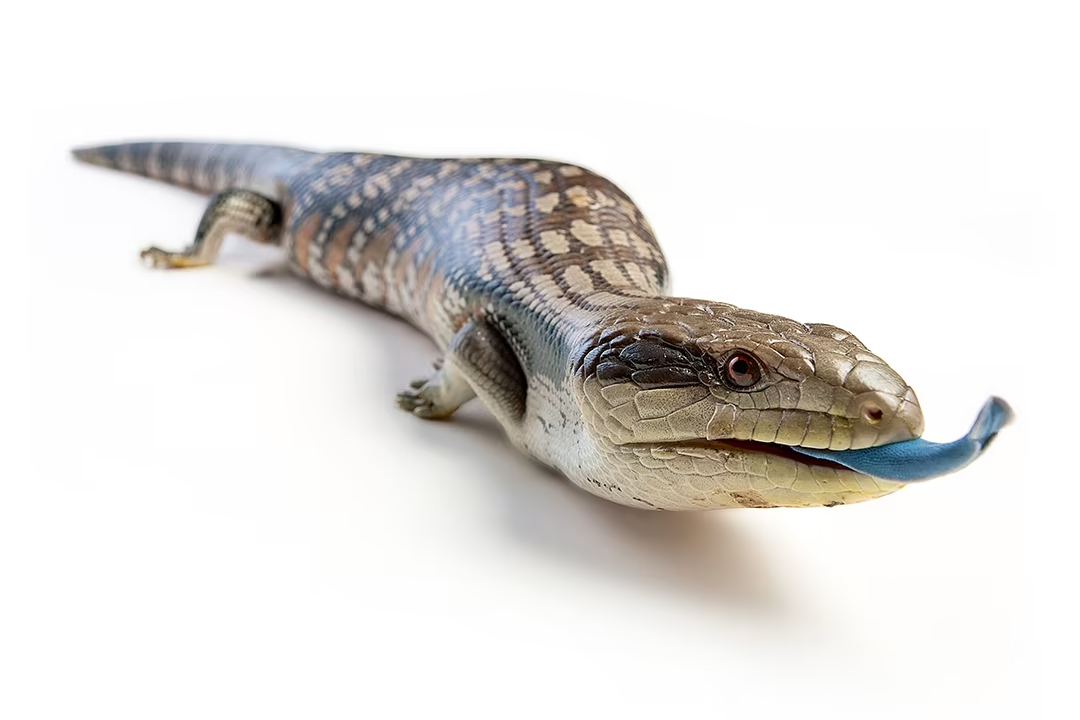
Tropical Skink Care: Habitat, Food, Health & Handling Guide
Learn how to care for Blue-Tongued Skink, recommended diet and habitat setup. Find the right food, supplies and equipment at your neighborhood Petco.
Updated on October 23rd, 2025
- New Pet
How to Safely Handle Reptiles: Stop Salmonella, Protect Your Family
Read more about our recommendations for preventing the transmission of infectious diseases in reptiles. Keep pets safe with these best practices.
Updated on October 23rd, 2025
- Health & Wellbeing
Swollen Turtle Eyes? Spot Vitamin A Deficiency & Optimize Diet
A condition in turtles termed squamous metaplasia occurs in vitamin A deficiency (hypovitaminosis A). It is a totally preventable disease as long as you feed the appropriate diet.
Updated on October 23rd, 2025
- Health & Wellbeing
1)Raptor didnt shed real well because he only shed his back legs and neck. 2)Both of his eye are shut. 3)green liquid on his enclosure bedding.
Soak Razor in warm water for 15-20 minutes. Gently rub off any loose shed but do not pull or tear at it. If he is wiggly, you can place him in a small container with paper towels moistened with warm water for 15-20 minutes. The moist heat and humidity should help with the shed. Make sure he can breathe in the container. You can put this moist hide in his enclosure so he has a place to go when he is shedding. Monitor his stool and submit a sample to your vet to diagnose intestinal parasites if you see more "green liquid".
Updated on September 24th, 2025
- Health & Wellbeing
my gf caught this lizard in Jeju, South Korea; we think it's of the Takydromus family; she is caring for him because she's worried about his injury - she has ordered mealworms for him to eat--any other recommendations? - he has had one of his hi
It does appear to be of the takydromus species. These grass lizards are common and fairly easy to keep. Being adept climbers, more vertical space should be offered in an enclosure. Branches and vines can be placed for climbing. Bring reptiles, they need an external heat source and UVB lighting. Daytime temps can range from 24 C to 30 C (75-85 F). Provide a basking spot of around 35 C to 38 C (95-100 F) using a heat lamp. Aim for 70-80% humidity. Provide a shallow bowl for water. Mist the cage daily. Feed appropriately sized prey, no bigger than the space between the eyes, that have been gutload for 24 hours prior to offering. This will maximize nutritional value. Crickets, mealworms, dubia roaches, waxworms or wingless fruit flies can all be offered. Dust prey with a calcium supplement and a multivitamin supplement several times weekly. Ideally, the wound should be addressed by a veterinarian experienced in treating reptiles. You can clean it with dilute Betadine or chlorhexidine
Updated on September 24th, 2025
- Health & Wellbeing
Our red eared slider Turtle has developed some white patches on his upper shell. He seems fine otherwise but the spots are slowly spreading. He gets natural sunlight outside 5 days a week but we are worried this may not be enough. A few pieces of his
You can use a UVB bulb indoors to supplement lighting. Be sure it is no more than 14-16 inches away from the surface of the basking spot and not blocked by glass or plexiglass. A multivitamin and a calcium/D3 supplement should also be used. Float a cuttlebone in the tank. Bongo will munch on it when needed. You can use a soft bristled brush and diluted betadine to gently scrub the affected areas. Dry dock (keep out of the water) him for about 1-2 hours after cleaning daily. If the spots do not resolve, have him examined by your veterinarian or a vet experienced in treating turtles. Read more about slider care here: http://www.anapsid.org/reslider.html
Updated on September 24th, 2025
- Health & Wellbeing
hi, my pet turtle is about 2 inches in size. it is a red eared slider. it is inactive since 3 days. it always stays on stone closing its eyes, even if i disturb it.it is struggling to open eyes.please help me by suggesting any medicine to make it ac
Check the water temperature and ambient temperature. Low temps can affect appetite and activity in reptiles. Keep the water between 24 C and 30 C. A basking spot out of the water should be 29 C to 31 C. UVB lighting should also be provided. Maintain water quality to prevent infections and feed an appropriate diet with vitamin and mineral supplementation. A vitamin A deficiency can cause swelling of the eyes. Repti-Turtle Eye Drops (by Zoo Med) can be used to help the eyes. Find it online or in the local pet store. Soak the little guy in a 50/50 mix of warm water and an electrolyte replacement beverage to maintain hydration. You can read more about care here: http://www.anapsid.org/reslider.html
Updated on September 24th, 2025
- Health & Wellbeing
Bearded dragon is having consistent problems in left eye. His eye has a hard crusting underneath I can not soak off! Have tried for days. Don’t want to pull it off and hurt him. His eye gets clear sticky fluid building up in the bottom of his eye. Ha
Check the humidity level. For beardies, it should range between 30 and 40%. Too high or too low can predispose Jank to infection or shedding complications. If a 20-30 minute warm compress doesn't help, have him examined by your veterinarian or experienced herp vet. A physical exam may diagnose or rule out abscess/infection or tumor. In either case, you'll need a vet to dispense medication or to pursue additional diagnostics (blood work, biopsy, aspirate, etc).
Updated on September 24th, 2025