Two Easy Ways to Start Earning Rewards!
Become a member today! Members-only pricing and offers, personalized care notifications, Vital Care points back on every purchase and more!
 Become a credit card member today!
Earn 2X Pals Rewards points at Petco
when you use Petco Pay!APPLY NOWLearn More About Petco Pay Benefits
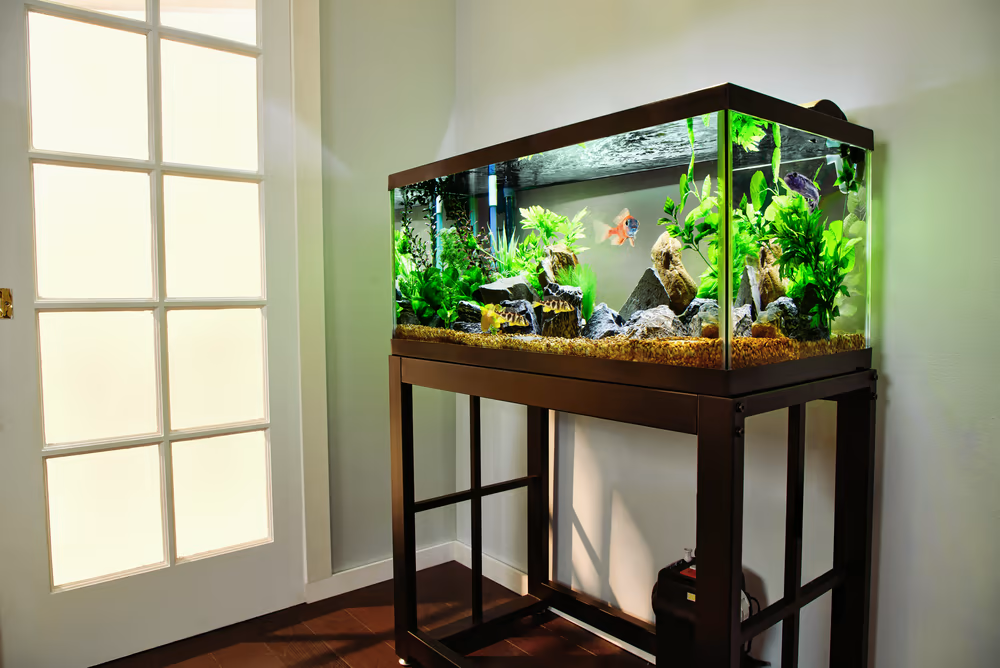
All-Glass Fish
Get It Today


Related Articles & Questions
- New Pet
Freshwater Semi-Aggressive Fish: Top Secrets for a Thriving Tank
Learn how to care for semi-aggressive fish, recommended diet & aquarium setup. Find the right food, supplies & equipment at your neighborhood Petco.
Updated on November 13th, 2025
- Home & Habitat
Aquarium Lighting Guide: Get the Best Light for Healthy Fish & Plants
We can help you navigate your way through all the types of lights in fish tanks and determine which type is best for your aquarium.
Updated on November 13th, 2025
- New Pet
Advanced Boxfish & Cowfish Care: Ultimate Tank Setup, Food, & Safety
Learn how to care for Boxfish & Cowfish, recommended diet and aquarium setup. Find the right food, supplies and equipment at your neighborhood Petco.
Updated on November 13th, 2025
- Training & Behavior
Finally! 10 Easy Ways to a Crystal Clear, Algae-Free Fish Tank
Our top ten most important tips for removing and keeping algae out of your aquarium.
Updated on November 13th, 2025
- New Pet
Brackish Water Fish Care: Your Complete Guide to Tank, Food & Species
Learn how to care for brackish water fish, recommended diet & aquarium setup. Find the right food, supplies & equipment at your neighborhood Petco.
Updated on November 13th, 2025
- Food & Nutrition
I have 2 salmenese tiger fish and two smaller fish in approximately 3.5 L bowl. I bought them on 1 April. 3 act normal but one act abnormal from first day. One salmenese tiger fish doesn't move much first it stayed at bottom now it's gapping at surfa
The bowl looks definitively a bit small for the two fishes. To understand exactly what is going on you need to approach this problem radically but logically. Begin by submitting a water sample for quality testing. Most pet stores will do this for free or a nominal fee. Clinical examination should always include a water quality check, even if you have done so already. Water testing should be performed with a quality test kit, measuring NH4, NO2 and NO3. High ammonia levels, PH imbalances may be responsible for these signs. Oxygen concentration and quality of the filters should be determined as well. If water quality is good and there are no major imbalances, your fish should get examined to look for any sign of bacterial/fungal infection and eventually water should be treated. Hope this answer was helpful, but please do not hesitate to contact us again on the forum or by requesting a consultation if you have any more questions or to discuss it any further.
Updated on August 12th, 2025
- Health & Wellbeing
hi, I need some help with water condition of my fish tank. I’ve recently got 6 new fish and added in my 10 gallon fish tank three days ago. I did set up my tank for 48 hours before adding fish but now the water gets cloudy with tiny air bubbles on th
48 hours is not long enough for a tank to properly cycle. Several weeks to a couple months are needed for beneficial bacteria to populate the substrate and filter. These bacteria break down wastes (ammonia, nitrites, nitrates) that are harmful to fish and can promote bacterial blooms resulting in cloudy water. The overfeeding likely contributed to the bacterial bloom. You can cycle with or without fish, however cycling with fish will increase the risk of loss. You'll need to monitor chemistry using a liquid test kit. The kits with strips are not as accurate. Perform partial water changes, no more than 25%, every few days or if ammonia levels begin to affect fish. Use only aged or conditioned water that is temperature matched to prevent stress or shock. Feed them every other day. Normally, you would add one fish at a time but that isn't possible for you now. Monitor chemistry and perform water changes until ammonia and nitrites are 0.25ppm or less and nitrates are 40ppm or less. This
Updated on August 12th, 2025
- Health & Wellbeing
All of my fish died after using a product purchased at Petco called ACUREL-F. How do I get their water safe to put in new fish?
I would recommend to have the water completely changed. New water should be ideally submitted for quality testing. Most pet stores will do this for free or a nominal fee. High ammonia levels, PH imbalances may be responsible for that as well. Oxygen concentration and quality of the filters should be determined as well. Please do not hesitate to contact us again on the forum or by requesting a consultation if you have any more questions or to discuss it any further.
Updated on August 12th, 2025
- Health & Wellbeing
My fish is laying on the fake plant and barely moving.
There are several causes that can provoke these signs fro water imbalances to specific diseases like swim bladder ones. This problem requires a quite radical but logic approach. Begin by submitting a water sample for quality testing. Most pet stores will do this for free or a nominal fee. High ammonia levels, PH imbalances may be responsible for that. Oxygen concentration and quality of the filters should be determined as well. If water quality is good and there are no major imbalances, your fish should get examined to look for any sign of bacterial/fungal infection and eventually water should be treated. Please do not hesitate to contact us again on the forum or by requesting a consultation if you have any more questions or to discuss it any further.
Updated on August 12th, 2025
- Health & Wellbeing
My fish tank got infested with pink algae and green algae and the fish are acting lethargic and dying.
Check the water chemistry using a home test kit or submit a water sample for testing. The local Petco may do this for free or for a small fee. Aim for an absence (0 ppm) of ammonia and nitrites with nitrates at 20ppm or less. Perform partial water changes to stabilize chemistry and/or to improve water quality. Rinse the filter media in tank water, not tap water, and replace it. Use only conditioned water that is temperature matched to prevent stress or shock. To limit algae growth, maintain pristine water quality via filtration and regular water changes. If possible, turn up filter flow to keep water moving. If this stresses the fish though, do not do it. Do not overfeed and remove any uneaten food promptly. Limit lighting to 8 hours daily and closely monitor water temperature as well. All these can promote algae overgrowth.
Updated on August 12th, 2025