Two Easy Ways to Start Earning Rewards!
Earn 2X Pals Rewards points at Petco
when you use Petco Pay!
Get It Today
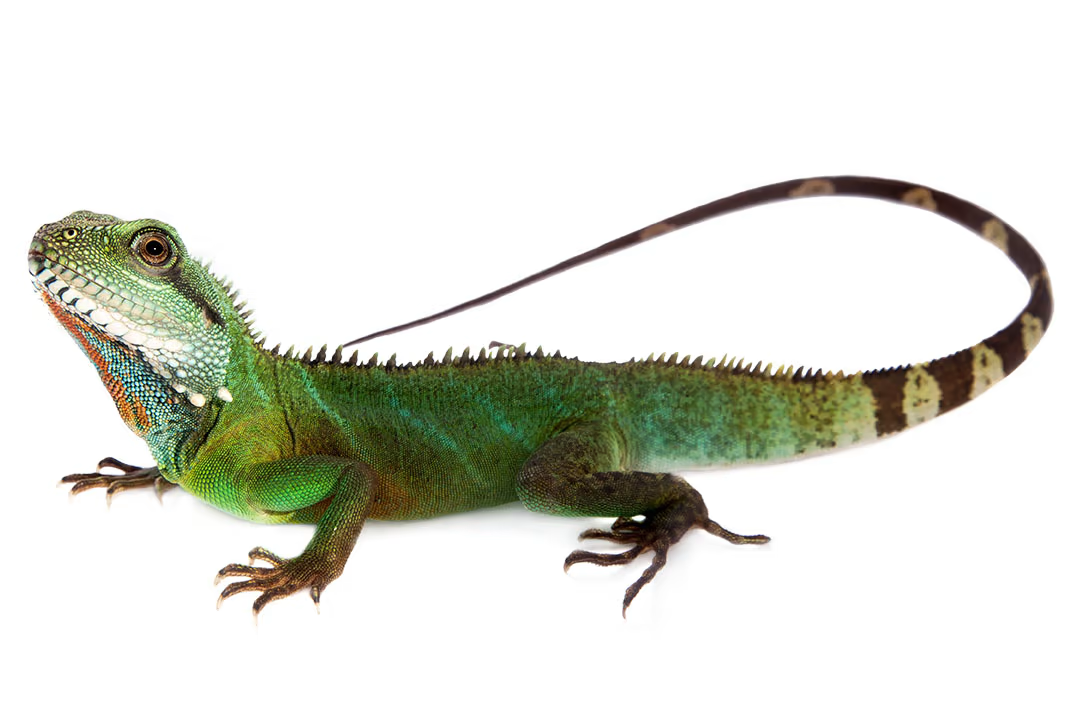
Learn how to care for tropical lizards, recommended diet & habitat setup. Find the right food, supplies & equipment at your neighborhood Petco.
Updated on November 13th, 2025
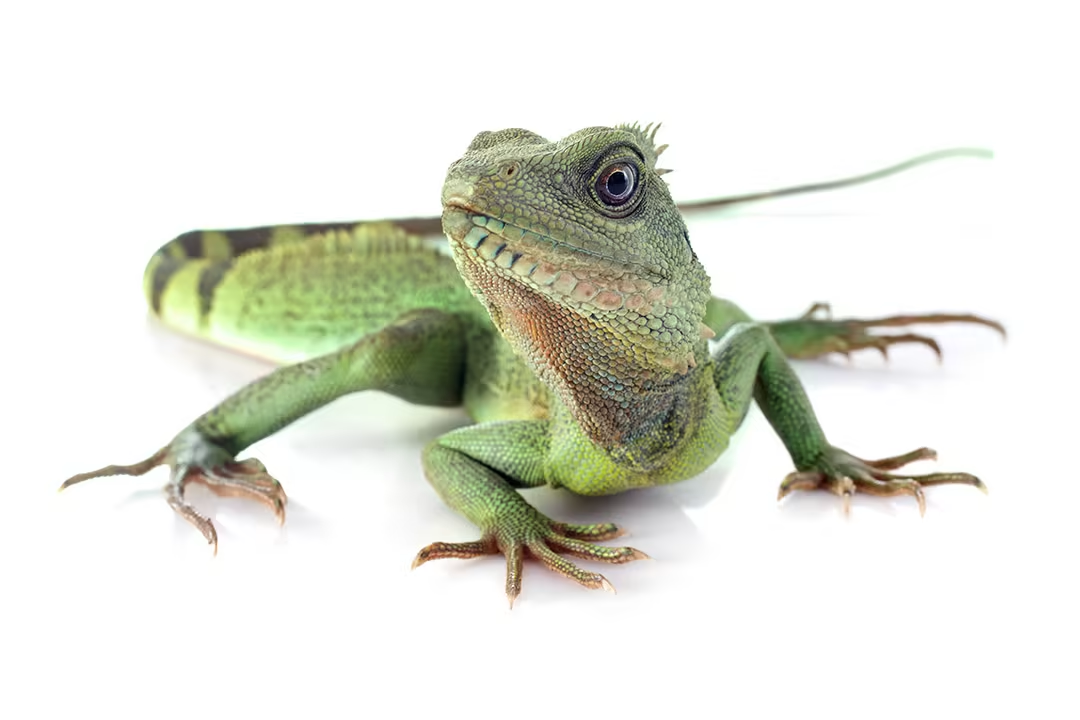
Learn how to take care of Water Dragons, recommended diet and habitat setup. Find the right food, supplies and equipment at your neighborhood Petco.
Updated on November 13th, 2025
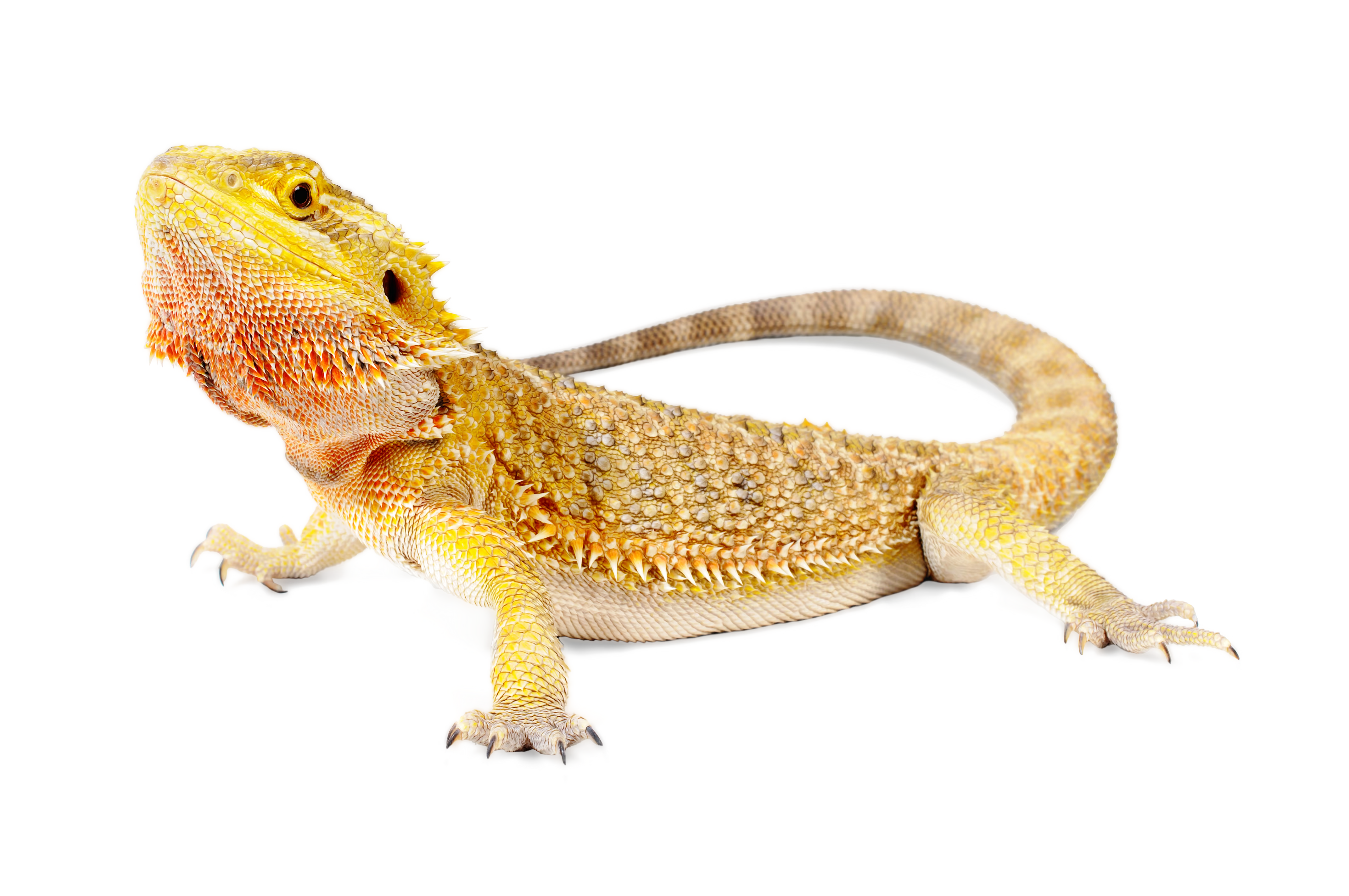
Learn how to care for arid lizards, recommended diet & habitat setup. Find the right food, supplies & equipment at your neighborhood Petco.
Updated on November 13th, 2025
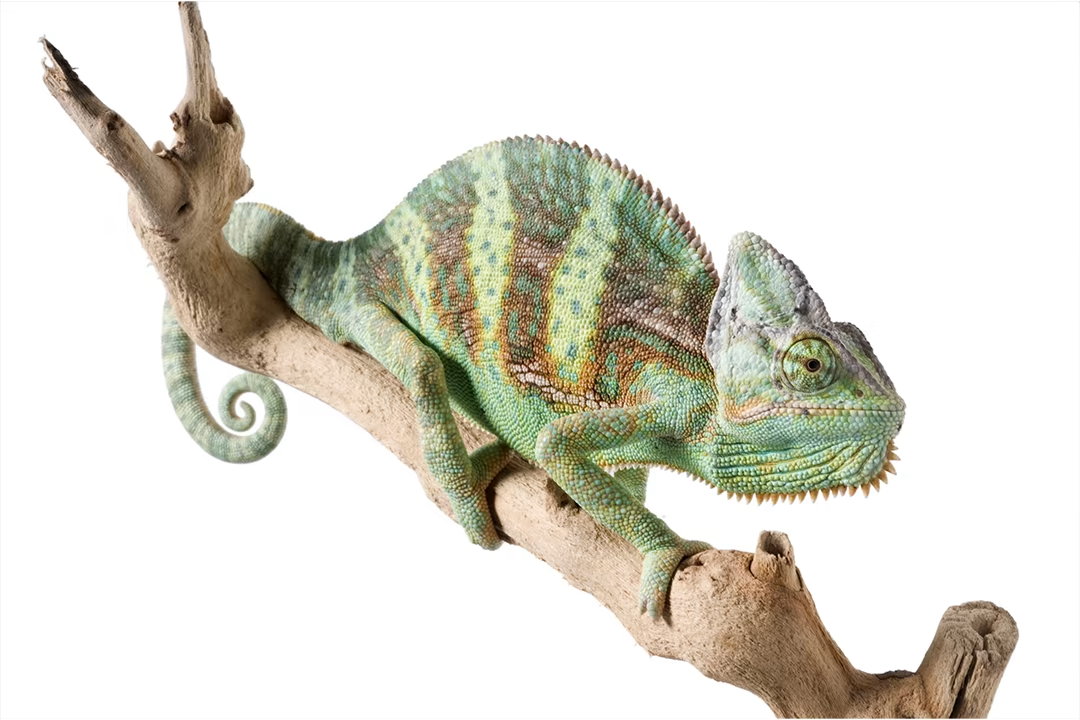
Learn how to take care of your Veiled Chameleon, tank size, diet & habitat setup. Find the right food, supplies and equipment at your neighborhood Petco.
Updated on November 13th, 2025
Read these guidelines about handling reptiles to provide a safe and fun environment for your pet, friends and family.
Updated on November 13th, 2025
Beardies are omnivores and eat a mix of greens and live prey. Adult beardies will eat more greens than prey. At his age, Majesty can be fed once daily. Alternate between prey and greens. Don't forget to dust food with a calcium supplement as well as a multivitamin. Always have fresh water available. Offer different types of greens such as mustard greens, dandelion greens, kale, bok choy or raw cabbage. Vegetables that can be fed include celery, carrots, squash and pumpkin. This list is my no means inclusive. If he won't eat greens, chop them finer and add strawberries or blueberries to the mix. Mixing in crickets or mealworms may also stimulate the appetite. As long as the stool is formed, size isn't an issue. It will change depending on how much and what he eats. A light cycle of 12 hours on and 12 hours off is sufficient. To get him acclimated to you, simply spend time with him. Initially, you'll want to just sit by his cage, then progress to placing your hand in the cage then
Updated on August 12th, 2025
Beardies can have regular soaks even as juveniles, especially when they are shedding. Use warm water and fill a container no higher than Lucky Man's shoulder. Never leave him unsupervised while he is bathing. Bearded dragons are omnivorous. They eat plant and animal matter. Greens and veggies should make up about 20% of the diet. Acceptable foods include carrots, green beans, squash, mustard greens, collard greens and dandelion greens. Prey should be of appropriate size. Beardies can eat crickets, locusts or dubia roaches. Wax worms can be offered as treats. Never feed insects caught indoors or in the yard. Raise your own, buy online or from a pet store. They do enjoy being held once acclimated and are very curious about their environment. Follow the link for more information: http://www.anapsid.org/bearded.html
Updated on August 12th, 2025
No. This is not normal. Juvenile bearded dragons are little eating machines. Check the temperature in the enclosure. Low temps can affect appetite in reptiles. Make sure prey are appropriately sized as well. Typically, you don't want to offer anything bigger than the space between the eyes. You can supplement the diet with Fluker's Repta-Boost. Find it in the local Petco. Offer greens in the morning, about 2 hours after the heat lamp turns on. You can sprinkle feed dried prey on greens to stimulate the appetite.
Updated on August 12th, 2025
Check the temperature in the enclosure. Low temps can affect appetite and activity in reptiles. Juvenile dragon need it just a bit warmer than adult dragons. Soak him in a warm 50/50 solution of water and unflavored PediaLyte. Do this for 15-20 minutes daily. Offer appropriately sized prey, no bigger than the space between the eyes as well as finely chopped greens and vegetables. Gut load prey for 24 hours prior to offering to maximize nutritional value. This can be done by feeding prey a high protein baby cereal, tropical fish flakes and fresh fruits and vegetables. If he doesn't start eating, have him examined by your veterinarian or a vet experienced in treating reptiles. Submit a stool sample to diagnose intestinal parasites. In the meantime, review bearded dragon care at the link below http://www.anapsid.org/bearded.html
Updated on August 12th, 2025
I commend you on adopting such a wonderful creature! She may need time to adjust to her new home and enclosure. Make sure it is large enough for her and located away from loud noises, vibrations, direct sunlight or high traffic areas. The commercial pellets are an excellent diet. You should also offer dark, leafy greens, diced vegetables and prey such as crickets or dubia roaches. These can be purchased from your local pet store. Gut load prey for 24 hours prior to offering to maximize nutritional value. Dust with a calcium supplement 3-5 times per week. Use a multivitamin 2-3 times per week. Make sure the temperature in her enclosure is appropriate. Low temps can affect appetite and activity in reptiles. The cage should be in the mid 70s F on the cool side and mid to high 80s F on the warm side. A basking spot of 90-100 F is recommended. She will also need a UVB light source running the length of her cage and about 12-14 inches away. This is vital for calcium, metabolism. You c
Updated on August 12th, 2025