

Two Easy Ways to Start Earning Rewards!
Become a member today! Members-only pricing and offers, personalized care notifications, Vital Care points back on every purchase and more!
 Become a credit card member today!
Earn 2X Pals Rewards points at Petco
when you use Petco Pay!APPLY NOWLearn More About Petco Pay Benefits
Tropical Marine Centre Betta Fish Shop


Related Articles & Questions
- New Pet
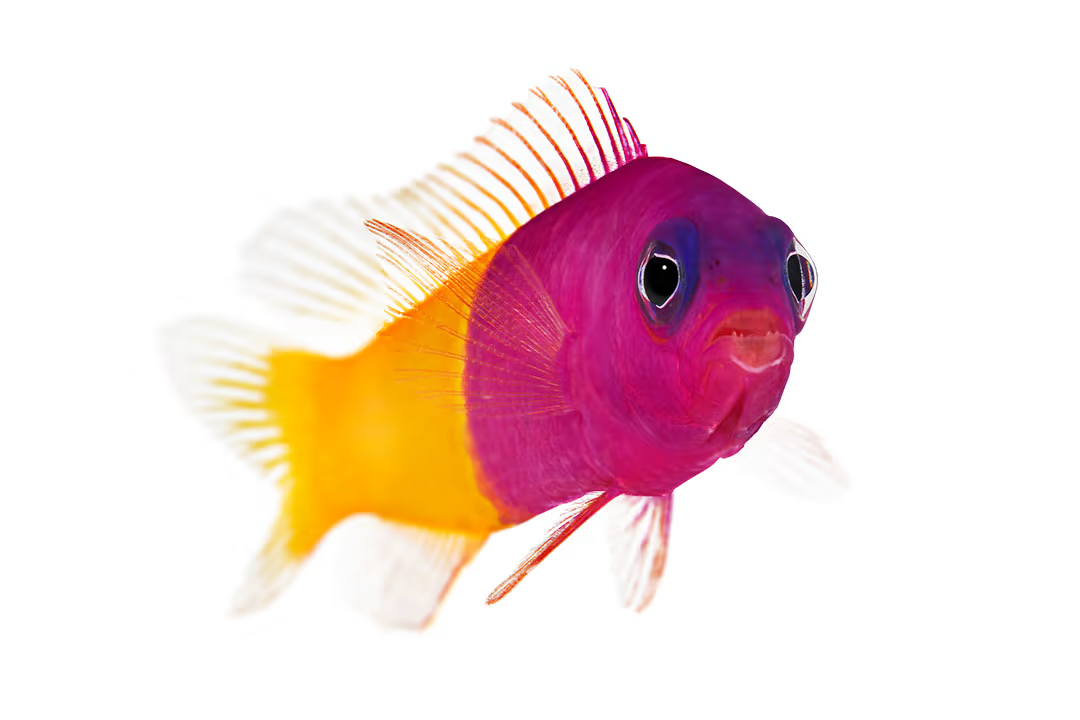
Master Small Marine Fish Care: Tank Setup, Food, & Compatibility Guide
Small Marine Fish are favorites with marine aquarists and includes a wide range of species.
Updated on October 23rd, 2025
- New Pet
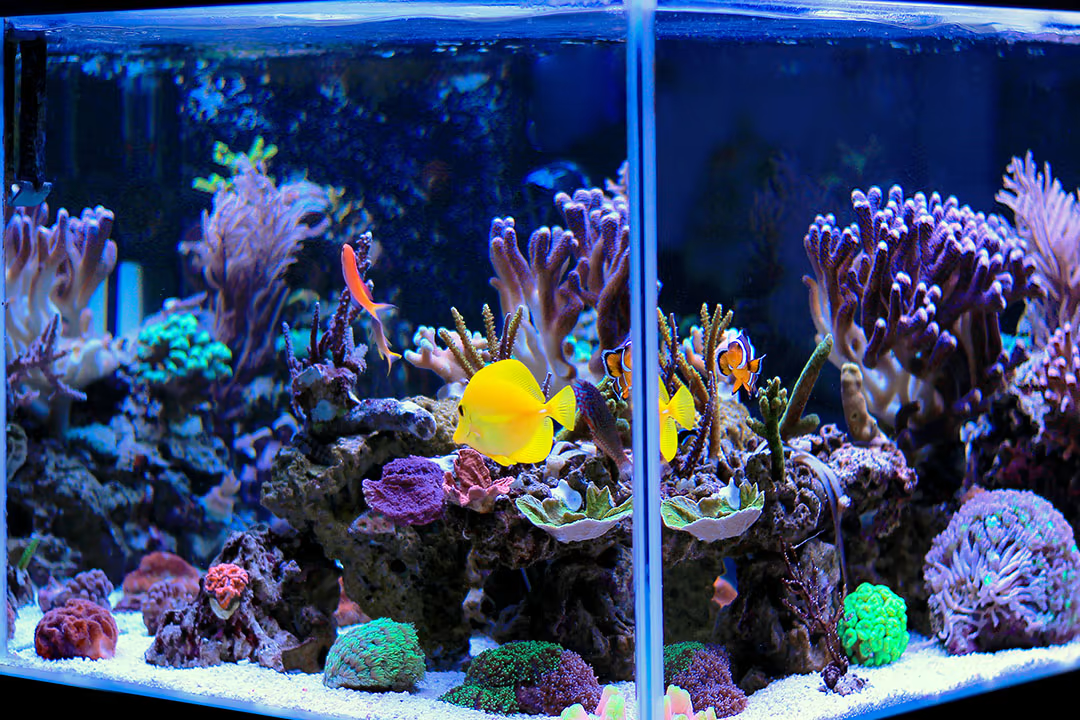
Build Your Thriving Saltwater Tank: Easy Setup for Marine Life
Learn how to set up a saltwater fish tank and key considerations regarding placement, supplies needed, and the overall set up process.
Updated on October 23rd, 2025
- New Pet
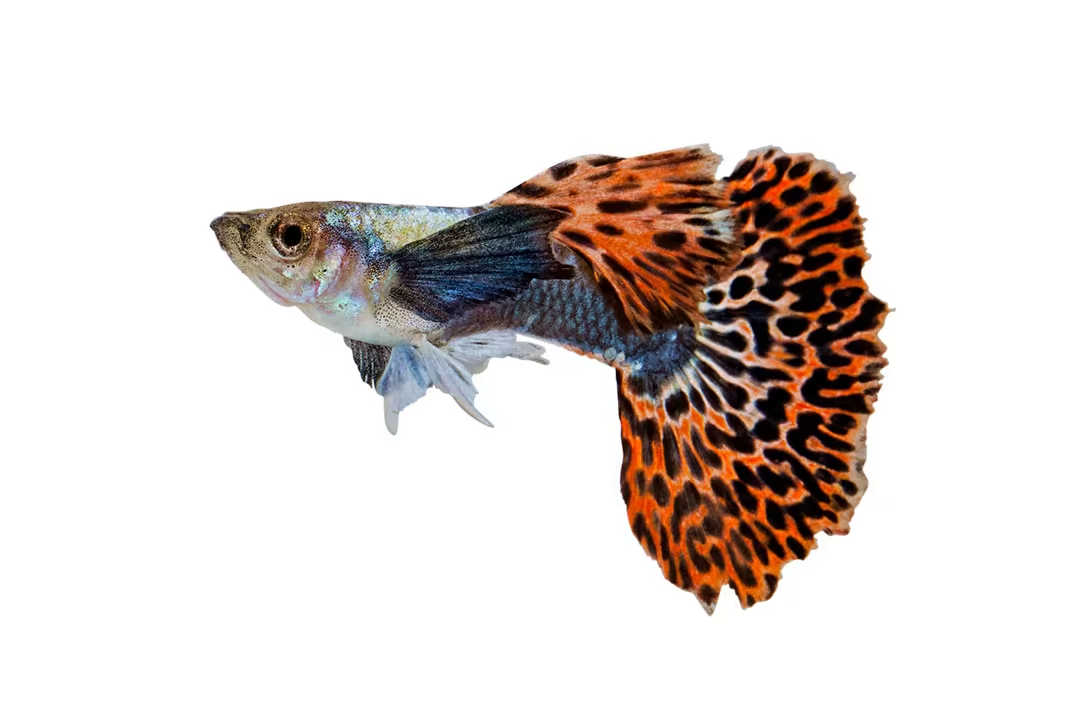
Beginner's Guide: Freshwater Livebearer Tank Setup, Food & Happy Fish
Learn how to care for freshwater livebearers, recommended diet & aquarium setup. Find the right food, supplies & equipment at your neighborhood Petco.
Updated on October 23rd, 2025
- New Pet
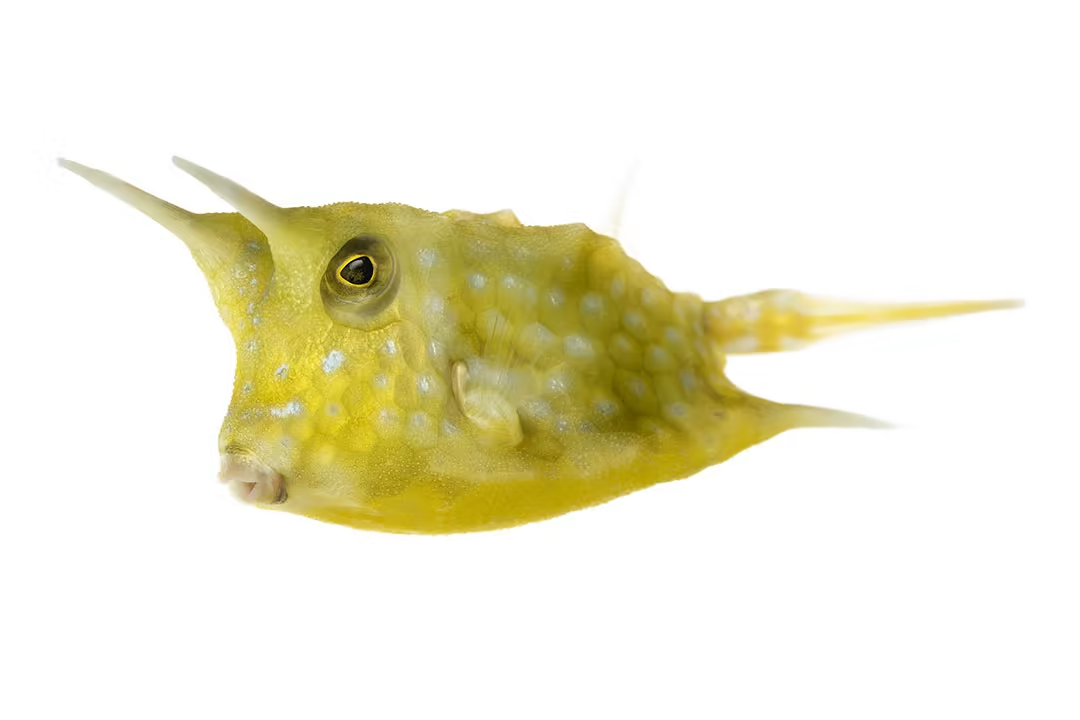
Advanced Boxfish & Cowfish Care: Ultimate Tank Setup, Food, & Safety
Learn how to care for Boxfish & Cowfish, recommended diet and aquarium setup. Find the right food, supplies and equipment at your neighborhood Petco.
Updated on December 21st, 2025
- New Pet
Brackish Water Fish Care: Your Complete Guide to Tank, Food & Species
Learn how to care for brackish water fish, recommended diet & aquarium setup. Find the right food, supplies & equipment at your neighborhood Petco.
Updated on October 23rd, 2025
- Health & Wellbeing
My fish is bloated near the head and he won't swim. He just floats at the top and his fins hardly ever move. He only eats his food when it begins to float to the bottom of the bowl. His fins are pitiful and dull. He won't interact or flare his fins a
Check water temperature and chemistry. Bettas do best between 78 F and 80 F. Unless the room is very warm, a small heater is typically required. Without a filter, frequent water changes are necessary to prevent elevated levels of ammonia, nitrites and nitrates. All can be toxic to fish at high levels. Use only aged or conditioned water that is temperature matched to prevent further stress or shock. Plain aquarium salt (NOT table salt) can be used as a general tonic, to reduce stress, to treat minor infection and to aid in recovery. Dissolve 1 teaspoon of salt in a cup of tank water and gently pour it into the tank. Perform daily water changes, using aquarium salt for 10-14 days. If there is no improvement, consider a broad spectrum antibiotic. You can find one in the aquarium section of the local pet or fish store. Follow label directions carefully.
Updated on September 24th, 2025
- Health & Wellbeing
My male Betta fish isn’t moving
Check the water temperature. Bettas do best between 78F and 80F. Low temps can affect activity in fish. You may need a small submersible heater to maintain water temperature. Next, check water chemistry. You can do this with a home test kit or by submitting a water sample for testing. Most pet stores will do this for free or for a small fee. Confirm an absence (0ppm) of ammonia and nitrites with a nitrate level of 40ppm or less. Partial water changes may be indicated to stabilize chemistry and maintain water quality. Use only aged or conditioned water that is temperature matched to prevent stress or shock.
Updated on September 24th, 2025
- Health & Wellbeing
My betta sits at the bottom of the tank and barely moves. He hasn't even eaten in a couple of days. The only sign that he's alive is his gills moving and slight movements every day. He also has some white coloring underneath his chin. It looks like i
These signs are unfortunately quite generic even though concerning. A radical but logic approach is essential in these cases. Begin by submitting a water sample for quality testing. Most pet stores will do this for free or a nominal fee. Clinical examination should always include a water quality check, even if you have done so already. Water testing should be performed with a quality test kit, measuring NH4, NO2 and NO3. High ammonia levels, PH imbalances may be responsible for these signs. Oxygen concentration and quality of the filters should be determined as well. If water quality is good and there are no major imbalances, your fish should get examined to look for any sign of bacterial/fungal infection and eventually water should be treated. Hope this answer was helpful, but please do not hesitate to contact us again on the forum or by requesting a consultation if you have any more questions or to discuss it any further. Please find the time to give us a feedback about the consulta
Updated on September 24th, 2025
- Health & Wellbeing
I just got a betta fish yesterday. He was fine and swimming an hour ago but now he is at the bottom of the tank just kinda laying there and Hindi g in his cave. He is still alive just lathergic. I think he is dying. We put 8 drops of water conditione
Check the water chemistry and temperature. Use a home test kit or submit a water sample for testing. Most pet stores will do this for free or for a small fee. Aim for 0 ppm ammonia and nitrites with nitrates at 20 ppm or less. Perform partial water changes, no more than 30% total volume at a time, to stabilize chemistry and improve water quality. Use only aged or conditioned water that is temperature matched to prevent stress or shock. Bettas are tropical fish and do best between 78 F and 80 F. You may need a small, submersible water heater to maintain temperature. Feed either the pellets or the bloodworms at one meal. Offering both is too much and he likely won't eat it all. Any uneaten food will rot in the tank and foul the water.
Updated on September 24th, 2025
- Health & Wellbeing
My betta fish is lying at the bottom of her quarantine tank. Her fins are clamped. She eats and moves but it not very lively. I just got her. She doesn't have stress stripes. Her quarantine is heated and I don't have a filter up and running yet. I wa
The stress of the move may be the cause. Of course illness, injury or parasites are also possibilities. Confirm proper water temp, 78-80 F is best. Check chemistry as well. Ammonia or nitrites are toxic. Set up filtration as soon as you can or perform partial water changes using aged or conditioned water that is temperature matched. Drop the water level to make it easier for her to surface until she acclimates and is more active.
Updated on September 24th, 2025