

Two Easy Ways to Start Earning Rewards!
Become a member today! Members-only pricing and offers, personalized care notifications, Vital Care points back on every purchase and more!
 Become a credit card member today!
Earn 2X Pals Rewards points at Petco
when you use Petco Pay!APPLY NOWLearn More About Petco Pay Benefits
Sera Aquarium Plant Fertilizers & Supplements

Related Articles & Questions
- Health & Wellbeing
Revive Your Aquarium Plants: Fix Nutrient Deficiencies for Lush Growth
Are your aquarium plants nutrient deficient? Petco is here to help you identify different deficiencies such as light, nitrogen, co2, magnesium, iron and more.
Updated on October 23rd, 2025
- Home & Habitat
Aquarium Substrate: Choose the Best for Healthy Fish & Plants
Choosing the right substrate for your aquarium is important and provides an area for beneficial bacteria to grow which keeps your aquatic environment safe.
Updated on October 23rd, 2025
- New Pet
Choose & Care for Low-Light Aquarium Plants: Beginner's Guide
Looking to learn about low- to medium-light aquarium plants? Petco has the information you need! View our guide to low- to medium-light aquarium plants today.
Updated on October 23rd, 2025
- New Pet
Aquarium Water Quality: Master Healthy Fish & Crystal Clear Tanks
Learn how to test your aquarium water. Poor water quality stresses fish, which leaves them susceptible to disease and possibly death.
Updated on October 23rd, 2025
 Product Guides
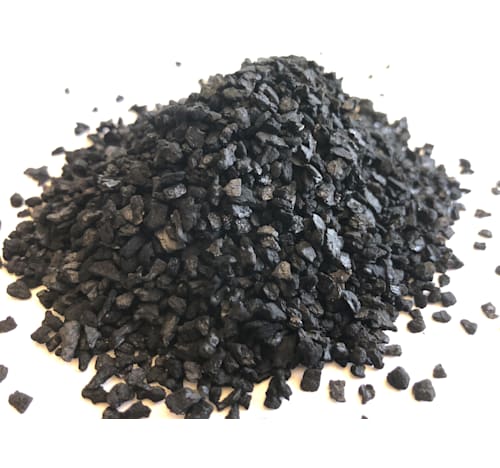
Activated Carbon for Aquariums: Get Crystal Clear Water & Healthy Fish
What is activated carbon and should you add it to your aquarium filter? Learn about activated carbon's uses, maintenance, and how to add it to your filter.
Updated on October 23rd, 2025
- Health & Wellbeing
I'm about to buy some new fishes mostly Tetra Can you help me what fish should I buy because I am beginner in this things. Please tell me what sort of things I should bring I have a one foot tank now other than that What should I purchase from Aquar
Before you buy any fish, you will need to set up the tank. A basic set up includes: a tank, filter, hood/light, heater, gravel and some decor. The tank should run without fish for at least 4 to 6 weeks. This gives it time to cycle. The Nitrogen Cycle is critical to the health of the tank and any fish you will be keeping. During this time, beneficial bacterial will populate the filter and substrate (gravel). These bacteria will be responsible for breaking down fish wastes and other wastes (uneaten food, dead plants, etc.). You will need a home test kit to monitor water chemistry (ammonia, nitrites, nitrates, pH) or you will have to submit water samples for testing. Most pet stores will do this for free or for a small fee. At first, you will see high levels of ammonia and nitrites. Over time, as bacteria grow, these levels will drop. When ammonia and nitrites are at 0 ppm and nitrates are below 20 ppm, you can consider adding fish. Regular (every 1 or 2 weeks) partial water changes as we
Updated on September 24th, 2025
- Health & Wellbeing
My fish tank got infested with pink algae and green algae and the fish are acting lethargic and dying.
Check the water chemistry using a home test kit or submit a water sample for testing. The local Petco may do this for free or for a small fee. Aim for an absence (0 ppm) of ammonia and nitrites with nitrates at 20ppm or less. Perform partial water changes to stabilize chemistry and/or to improve water quality. Rinse the filter media in tank water, not tap water, and replace it. Use only conditioned water that is temperature matched to prevent stress or shock. To limit algae growth, maintain pristine water quality via filtration and regular water changes. If possible, turn up filter flow to keep water moving. If this stresses the fish though, do not do it. Do not overfeed and remove any uneaten food promptly. Limit lighting to 8 hours daily and closely monitor water temperature as well. All these can promote algae overgrowth.
Updated on September 24th, 2025
- Health & Wellbeing
I need your advice on the best ich treatment for a ten gallon tank with live plants, snails, a Corydora catfish, a Betta, an Ottocinclus, and a baby Bristlenose Plecostomus. The ich is very minor at point right now, but feel I should treat before it
The safest treatment would be a temporary increase in water temperature and some plain aquarium salt (NOT table salt). Ich is very sensitive to temperature. Gradually increase water temperature, by no more than 1 degree F per hour, up to 86 F. Hold it at that temperature for at least 2weeks. This will speed up the life cycle and prevent reproduction. You can perform partial water changes (30%) and vacuum the substrate during treatment. Use only aged or conditioned water that is temperature matched to prevent stress or shock. An airstone should be used to increase oxygenation since warm water does not hold as much oxygen as cooler water. This could affect some the fish. Aquarium salt can be dissolved into the tank at 1-2 teaspoons per gallon of water. Dissolve it in a cup of tank water then pour it gently into the tank. When performing water changes, treat only the amount of water being replaced with salt, not the entire tank volume. After 2 weeks, gradually decrease water temperatur
Updated on September 24th, 2025
- Health & Wellbeing
My flowerhorn tanks water has exptremely high nitrate level . I returned from vacation yesterday to find a cloudy tank and high levels nitrate . I did a 50% water change and added prime . He now is gasping for air or at least that’s what it looks lik
If you can get him into a separate tank, that may be helpful. Remember though, a rapid change in nitrates can be just as dangerous as elevated nitrates. Maintain temperature and oxygenation. Use an air stone or bubble wand if necessary. Perform another partial water ( no more than 30% total volume) in a couple days, then again in another 2 days to gradually reduce nitrates. Live plants will also absorb some of the nitrates. There are also commercial products that can be used. Only one method of treating the tank should be used each day to prevent a rapid decrease in nitrate levels.
Updated on September 24th, 2025
- Health & Wellbeing
Hello... I would like to offer filtration coaching for fish questions. Can I answer questions on this forum?
You should contact by email the administrators of the website (you can find general email on the contact section) and they put you in touch with the Head Vet in charge of hiring new experts. Best of luck and hope to see you joining the team soon. Dr. Orioles
Updated on September 24th, 2025