

Two Easy Ways to Start Earning Rewards!
Become a member today! Members-only pricing and offers, personalized care notifications, Vital Care points back on every purchase and more!
 Become a credit card member today!
Earn 2X Pals Rewards points at Petco
when you use Petco Pay!APPLY NOWLearn More About Petco Pay Benefits
Repashy Small Pet
Get It Today


Related Articles & Questions
- New Pet
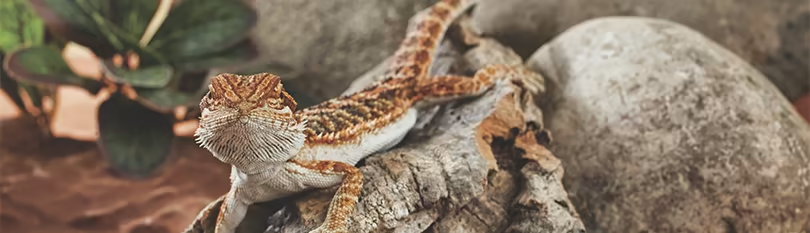
Reptile Enclosure Setup: Create a Thriving Habitat for Your Pet
Learn how to setup your reptiles terrarium to ensure your reptile lives a wholesome & happy life. Shop at your local Petco for all reptile terrarium needs.
Updated on October 23rd, 2025
- New Pet
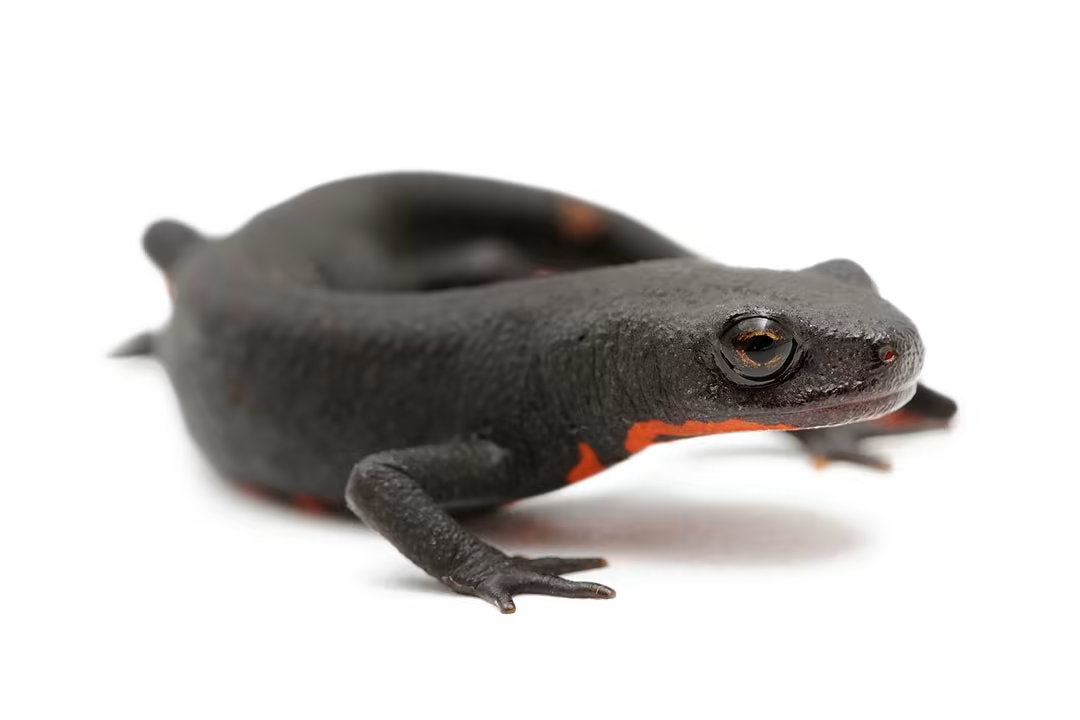
Mastering Pet Salamander & Newt Care: Food, Habitat, Health Guide
Learn How to Care for a Salamander & Newts, recommended diet and habitat setup. Find the right food, supplies and equipment at your neighborhood Petco.
Updated on October 23rd, 2025
- New Pet
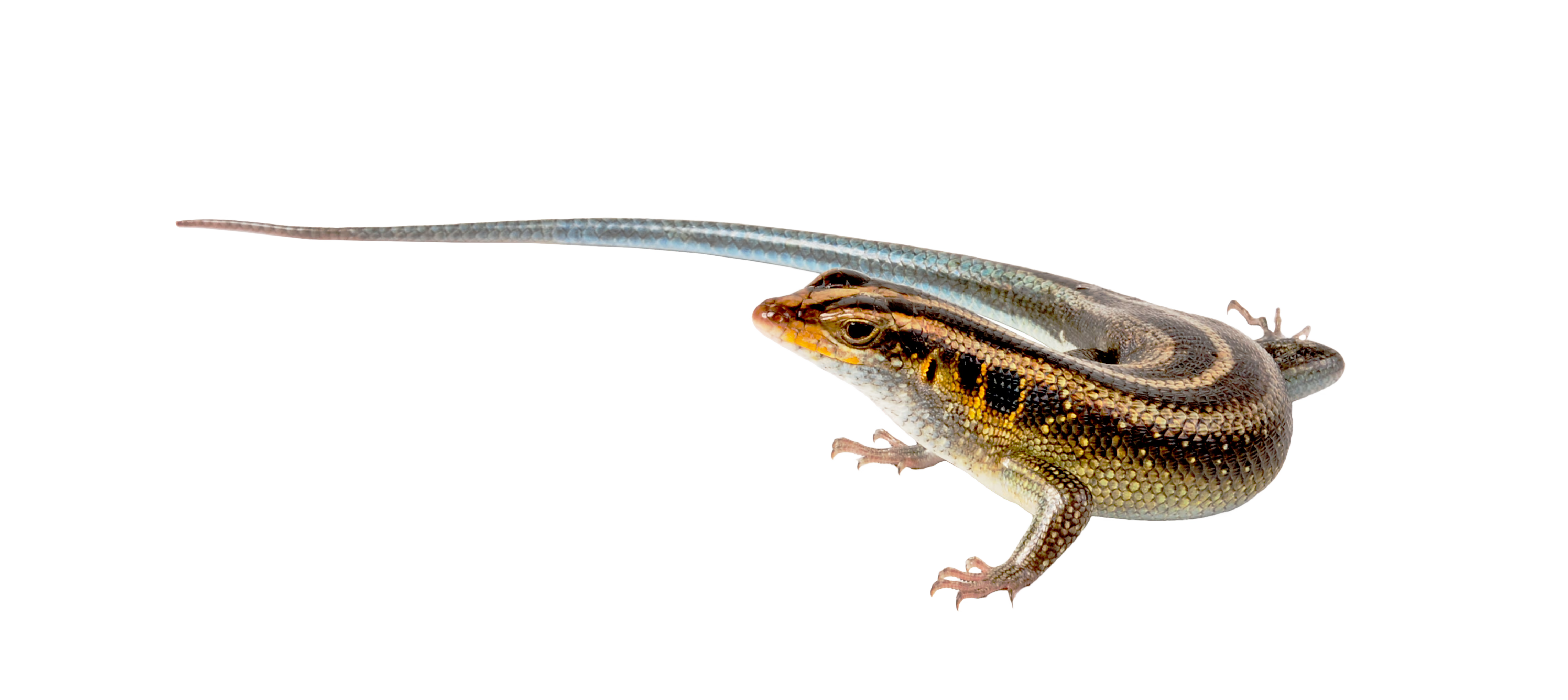
Arid Skink Care: Your Ultimate Guide to Habitat, Food & Health Tips
Learn how to care for an Arid Skink, recommended diet and habitat setup. Find the right food, supplies and equipment at your neighborhood Petco.
Updated on October 23rd, 2025
- Home & Habitat
Reptile Lighting: Choose the Best Heat & UVB Lamp for Your Pet
When it comes to reptile habitats, one of the most essential elements to creating a happy home for your pet is including the appropriate type of lighting. Zoo Med helps outline which lights are right for your pet.
Updated on October 23rd, 2025
- New Pet
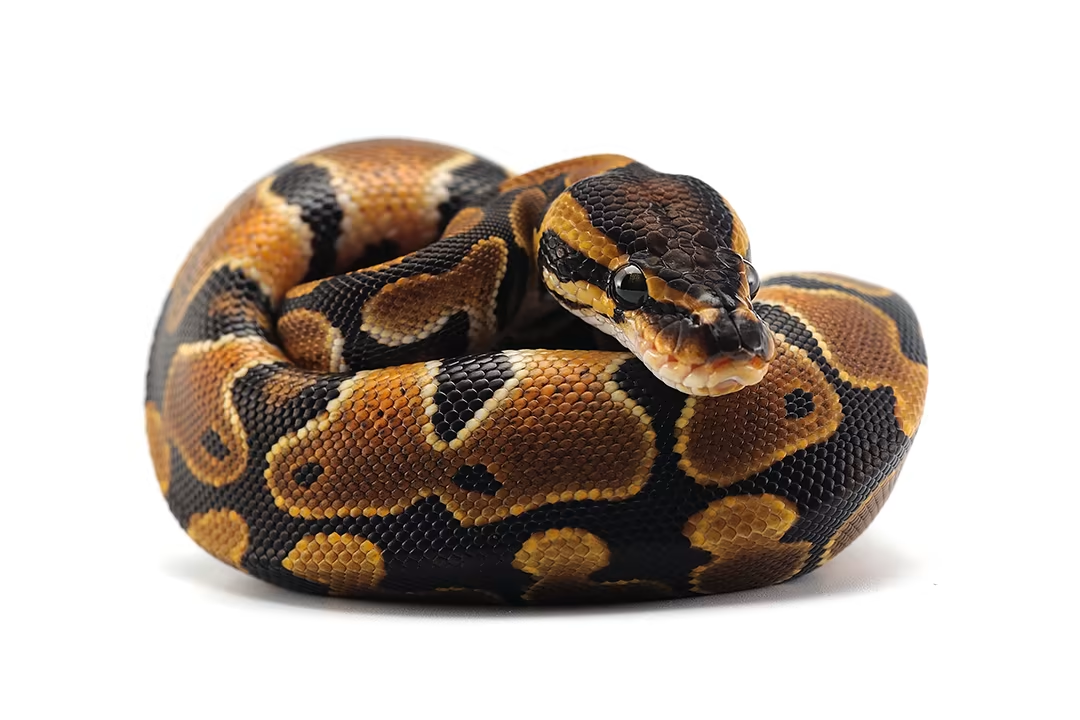
Ultimate Ball Python Care: Setup, Feeding, & Health for Beginners
Learn how to care for a Ball Python, recommended diet and habitat setup. Find the right food, supplies and equipment at your neighborhood Petco.
Updated on October 23rd, 2025
- Health & Wellbeing
He isnt eating well and hasnt had the appetite he used to for a long time also he had some nose rub im wondering what could be wrong if its his enclosure or him being stressed from being close to my chameleon or something i need to take him to the ve
Use a background to block his view. This may prevent glass surfing or nose rubbing as well as provide more privacy/security. Again, check the temps in his enclosure to make sure it is species appropriate. Offer a variety of crickets, mealworms, dubia roaches, silkworms and wax worms. Gut load prey for 24 hours prior to offering. Dust appropriately with vitamins and minerals regularly. He may also benefit from a soak in a warm 50/50 solution of water and unflavored PediaLyte. If his appetite does not return after adjustments to environment and diet, have him examined by your veterinarian or a vet experienced in treating reptiles. Submit a stool sample to diagnose intestinal parasites or bacterial overgrowth.
Updated on September 24th, 2025
- Health & Wellbeing
I adopted a bearded dragon she is eight years old and she has not been eating since I have a doctor which has been one week she has been given what the lady that gave her told me to give her but she still has not eaten anything
I commend you on adopting such a wonderful creature! She may need time to adjust to her new home and enclosure. Make sure it is large enough for her and located away from loud noises, vibrations, direct sunlight or high traffic areas. The commercial pellets are an excellent diet. You should also offer dark, leafy greens, diced vegetables and prey such as crickets or dubia roaches. These can be purchased from your local pet store. Gut load prey for 24 hours prior to offering to maximize nutritional value. Dust with a calcium supplement 3-5 times per week. Use a multivitamin 2-3 times per week. Make sure the temperature in her enclosure is appropriate. Low temps can affect appetite and activity in reptiles. The cage should be in the mid 70s F on the cool side and mid to high 80s F on the warm side. A basking spot of 90-100 F is recommended. She will also need a UVB light source running the length of her cage and about 12-14 inches away. This is vital for calcium, metabolism. You c
Updated on September 24th, 2025
- Health & Wellbeing
My pet Cheeto is about 2 months old. He’s started shedding every now and then but I’ve noticed he has two areas on his feet where the skin under the scales looks exposed. I’m concerned. He’s a baby so I know he can catch stuff easily. It worries me e
I think this may be a repetition of a previous question. This could be due to a bacterial or fungal infection causing scale rot. Swab the infected area with a diluted povidone-iodine solution twice daily. Scrape away the infected area gently with a blunt tool or a cotton pad. If this time of first line treatment does not help and you do not see any improvement in 48hours a check up at your local veterinarian would be required as antibiotic ointment and more aggressive treatment may be needed. Hope this answer was helpful, but please do not hesitate to contact us again on the forum or by requesting a consultation if you have any more questions or to discuss it any further. Please find the time to give us a feedback about the consultation as that will be used to improve our service.
Updated on September 24th, 2025
- Health & Wellbeing
My baby turtle won’t eat. I️ got him food from petco that’s made for baby turtles and he hasn’t touched it. Not sure what to do.
Offer a varied diet including pelleted food, fresh greens and prey such as tiny crickets or earthworms. You can get prey from the pet store, do not feed wild caught insects. It may take a day or two for him to acclimate to his new environment. Keep offering fresh food daily. Be sure environmental parameters are appropriate for the species of turtle you have. This includes adequate heat, UVB lighting and water quality. If you know the species, post it in a new question or request a consultation for more detailed care information.
Updated on September 24th, 2025
- Health & Wellbeing
Our 5 year old Bearded Dragon seems sick. We’ve had him since birth. He’s always loved to eat meal worms crickets and greens. He’s very picky on the greens we’ve never been able to get him to eat any other fruits or veggies. Few months ago he started
Check the temperature in the enclosure. Low temps can affect activity and appetite in reptiles. You can soak him in a warm 50/50 solution of water and unflavored PediaLyte for about 20 minutes every few days to prevent or treat mild dehydration. In case he is constipated, you can gently massage the abdomen, front to back, during the soak. You can supplement his diet with Fluker's Repta-Boost ( https://www.petco.com/shop/en/petcostore/product/flukers-reptaboost-insectavore-and-carnivore-high-amp-boost ). Find it in the local Petco. Continue to offer fresh, chopped greens and prey. Place them in a shallow cup to make it easy for him to eat. Survey the area in and around the cage for any negative stimuli. This may include loud noises, strong vibrations, high traffic or cold drafts. Reduce or eliminate any if found. Consider a tank surround to limit his view in case something he sees is causing him stress or making him angry. If symptoms persist or worsen, he will need to be physically e
Updated on September 24th, 2025