Two Easy Ways to Start Earning Rewards!
Become a member today! Members-only pricing and offers, personalized care notifications, Vital Care points back on every purchase and more!
 Become a credit card member today!
Earn 2X Pals Rewards points at Petco
when you use Petco Pay!APPLY NOWLearn More About Petco Pay Benefits
Mack's Natural Reptile Food Bearded Dragon Food

Related Searches
Related Articles & Questions
- Home & Habitat
Bearded Dragon Lighting: Your Guide to Essential UVA & UVB for Health
Bearded dragons have specific lighting requirements that emulate their natural warm and dry habitat. Learn about their lighting needs at Petco.
Updated on November 13th, 2025
- Health & Wellbeing
Bearded Dragon Not Eating? Why & How to Get Them Eating Again
Learn why your bearded dragon is not eating. Visit petco.com for more information on the causes and what to do about them.
Updated on November 13th, 2025
- New Pet
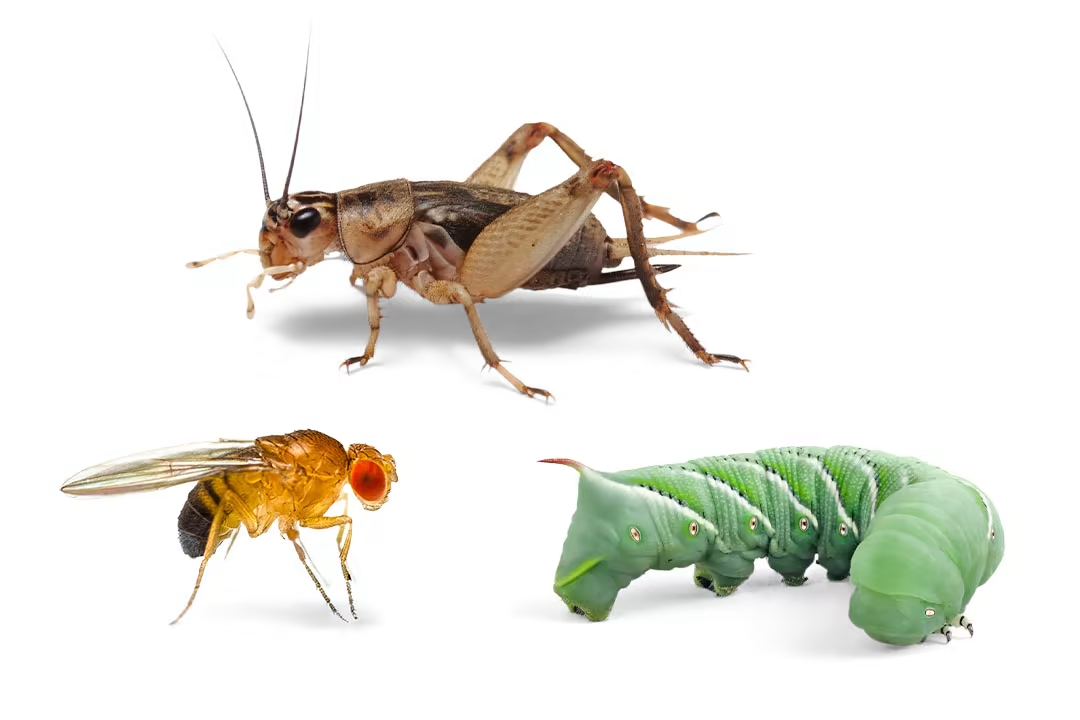
Reptile Feeding: Live Insect Selection & Care for Optimal Health
Learn about live insects for reptile feeding, recommended diet & habitat setup. Find the right food, supplies & equipment at your neighborhood Petco.
Updated on November 13th, 2025
- Health & Wellbeing
Bearded Dragon Impaction: Spot Signs, Causes, & Prevent It Now
Learn how to identify bearded dragon impaction and what to do. Stop by Petco to learn about the signs of impaction in bearded dragons, symptoms and treatment.
Updated on November 13th, 2025
- New Pet
Arid Lizard Care: Expert Tips for Optimal Habitat, Diet & Health
Learn how to care for arid lizards, recommended diet & habitat setup. Find the right food, supplies & equipment at your neighborhood Petco.
Updated on November 13th, 2025
- Food & Nutrition
My roommate has a bearded dragon that she hasn’t given food or water to in quite some time. I’m worried about the bearded dragon and I don’t have the money to get anything for them.
Reptiles can go some time without eating, but they do need to eat eventually. Crickets are not expensive. Fresh greens and vegetables can also be purchased rather inexpensively. You can soak Toad in a warm 50/50 solution of water and unflavored PediaLyte or just warm water to maintain hydration. He does need to eat though. If your friend cannot provide adequate care, he or she should consider rehoming Toad. Review dragon care at the links below. http://www.reptilesmagazine.com/Care-Sheets/Lizards/Bearded-Dragon/ http://www.anapsid.org/bearded.html
Updated on August 12th, 2025
- New Pet
I just recently adopted a baby bearded dragon who is trying to pull out of failure to thrive he is a little bloated and constipated trying to give him water and Emeraid IC .07ml seem to be pulling out of it for a while but past 3 days is not as inter
Confirm proper enclosure temperatures. Young dragons need warmer temps than adults. You can review care and feeding at the link below. http://www.anapsid.org/bearded.html Soak him in a warm 50/50 solution of water and unflavored PediaLyte for 20-30 minutes daily. This will provide warmth and hydration. be careful when feeding or administering water by syringe, you can easily cause him to aspirate fluids into his lungs which will cause respiratory infection. Fluker's Repta Boost is another supplement that can be used if the EmerAid is not sufficient. Submit a stool sample to your veterinarian to diagnose intestinal parasites.
Updated on August 12th, 2025
- Health & Wellbeing
Hi, I have a beardie who is about a year and a half now. I'm worried he isnt getting enough nutrients. He eats blueberries and freeze dried meal worms but I dont know if that is enough. Fresh veggies are so expensive and go bad before he can eat them
Thanks for reaching out about Brutus and including photos. You are correct in that blueberries and mealworms are an incomplete diet. A wide variety of vegetables are required. Try offering frozen/thawed medley pack. If he trusts you, offer by hand. Fresh vegetables are healthier and can be offered in small amounts. Green, yellow, red and orange vegetables are all required as each provides different nutrients. Good luck.
Updated on August 12th, 2025
- Health & Wellbeing
I have a juvenile bearded dragon and I feed him 4-5 crickets a day, I sometimes don’t give him crickets and I give him strawberries and carrot. Am I feeding him correctly?
A bearded dragon is considered to be a juvenile once it reaches the ages between five months and about 18 months old. If Rango is in this age range he is considered a juvenile. There are different feeding requirements for babies, juveniles and adults. With juvenile bearded dragons you should cut down the amount of insect prey to one feeding per day, while vegetables should be served at least four times per week. The size of insect prey can be a bit larger as well, but remember to not feed it anything larger than Rango's head. Rango can be offered items that were off limits to babies, such as mealworms. It is recommend to only offer mealworms once or twice per week. It is important at this stage to begin offering your bearded dragon more vegetables, and slightly less insect prey. Vitamin and calcium supplements should be given to bearded dragons at each stage of their life. The majority of these supplements come in a powdered form that easily clings to food. Juvenile foods should b
Updated on August 12th, 2025
- Health & Wellbeing
I just bought a fancy bearded dragon. It’s maybe 4 inches. I was wondering how much I should feed it. Not how many times a day but a quantity amount. How many crickets and what amount of veggies (oz)
Feed him as many appropriately sized (no bigger than the space between his eyes) crickets or dubia roaches as he will eat in 10-15 minutes. Baby beardies are eating machines consuming as many as 80 crickets or more daily! Juveniles will eat more live pretty than vegetables. Offer about a tablespoon or two of finely chopped spring mix for him. Change it daily. You can also offer squash, peppers, asparagus, pumpkin and yams just to name a few other veggies. Avoid iceberg lettuce, celery and light colored greens. These offer little in the way of nutrition.
Updated on August 12th, 2025