Two Easy Ways to Start Earning Rewards!
Become a member today! Members-only pricing and offers, personalized care notifications, Vital Care points back on every purchase and more!
 Become a credit card member today!
Earn 2X Pals Rewards points at Petco
when you use Petco Pay!APPLY NOWLearn More About Petco Pay Benefits
Lifegard Aquatics Aquarium Brushes, Nets, & Cleaners

Related Searches
Related Articles & Questions
- Care Sheets
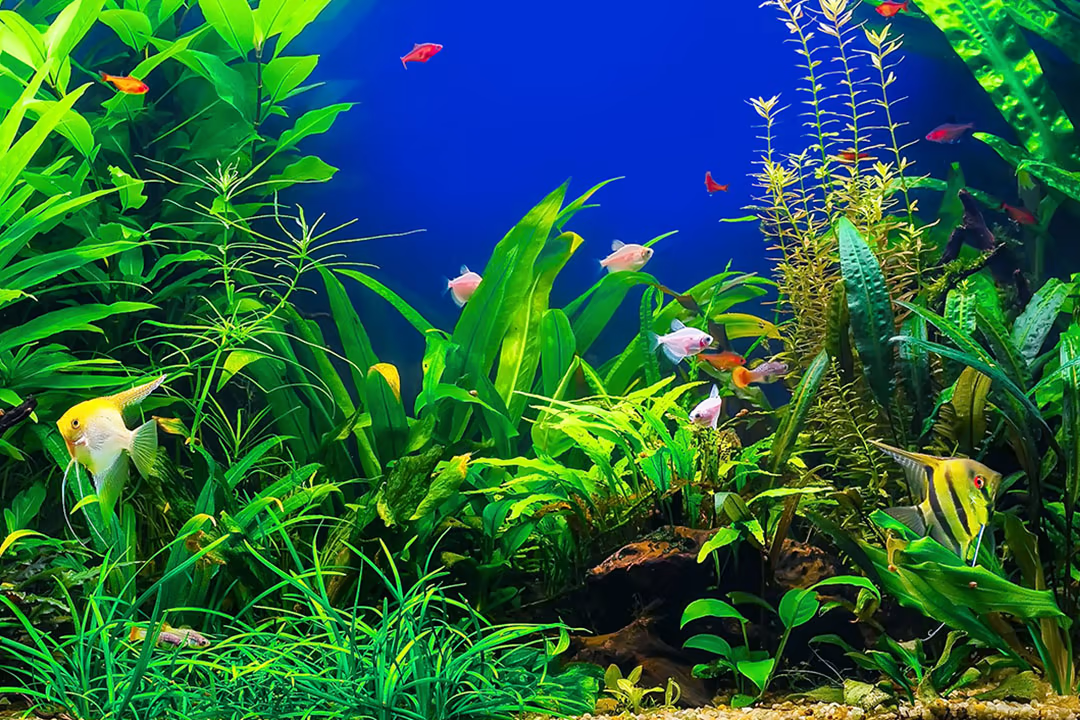
Aquatic Pet Safety: Keep Your Home Aquarium Pets Healthy & Safe
Learn how to safely handle your aquatic life to avoid toxin & bacterial exposure. Find aquatic life care supplies at your neighborhood Petco pet care center.
Updated on October 23rd, 2025
- Care Sheets
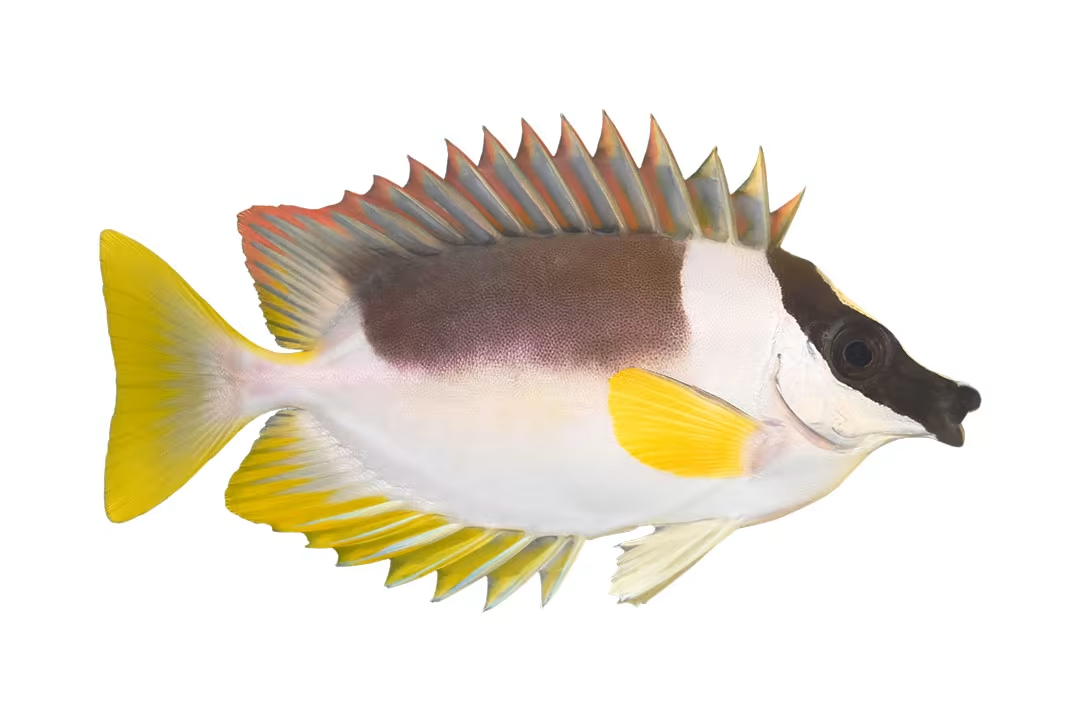
Foxface & Rabbitfish Care: Tank, Food, Compatibility, & Venomous Spines
Learn how to care for Foxface fish & Rabbitfish, recommended diet and aquarium setup. Find the right food, supplies and equipment at your neighborhood Petco.
Updated on April 9th, 2026
- Care Sheets
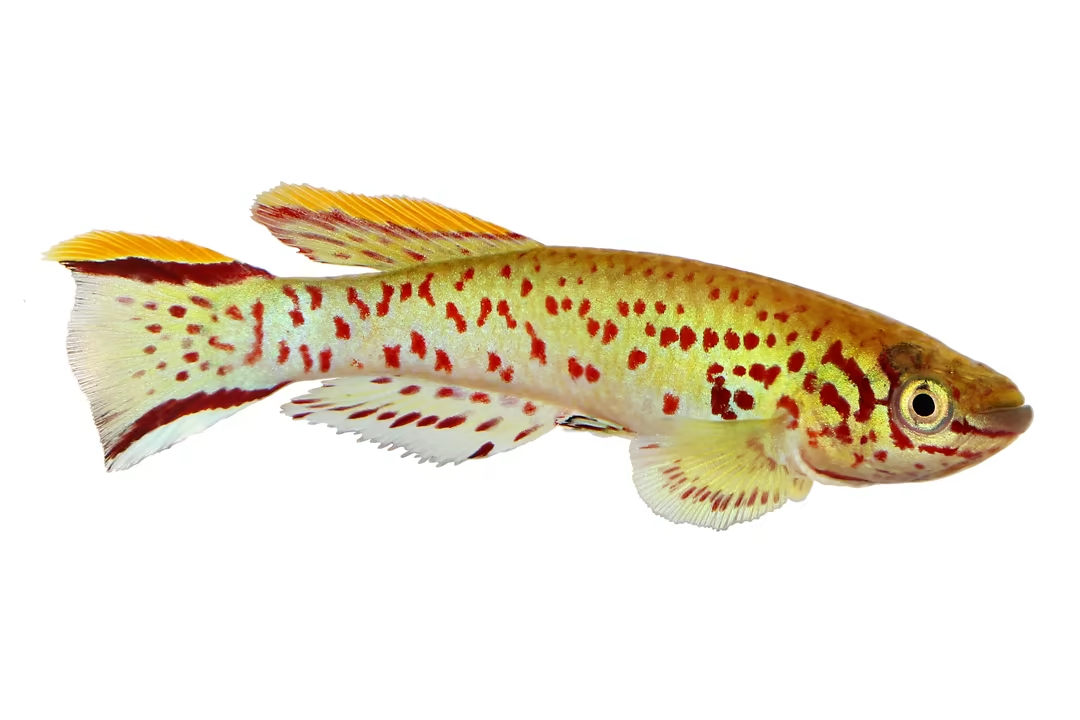
Killifish Care Guide: Unlock Vibrant Health for Your Aquarium Fish
Learn more about Killifish and their care to see if they are the right aquatic life to begin or add to your aquarium.
Updated on April 9th, 2026
- Care Sheets
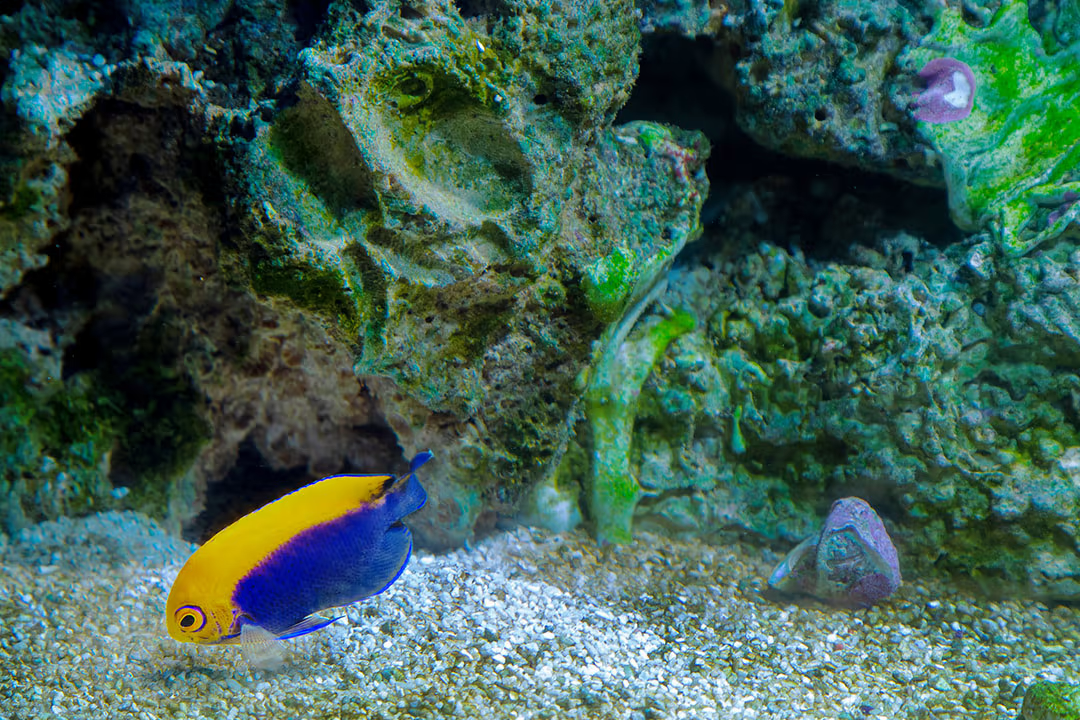
Your FOWLR Marine Tank: Easy Setup Guide for Live Rock Fish
Learn how to care for Marine FOWLR Aquariums. These tanks have easier upkeep and require less testing and supplementation than a reef tank. You can keep many fish who would generally consume corals and invertebrates, making it a popular setup choice for more aggressive fish.
Updated on October 23rd, 2025
- Care Sheets
Live Rock & Sand: Setup, Curing, & Care for Thriving Reef Tanks
Learn how to care for live rock & sand. Live rock serves as a platform for coral and invertebrates and provides a surface for beneficial bacteria to live.
Updated on October 23rd, 2025
- Vet Q & A
Why are my fish gasping at the surface after cleaning the bowl?
Begin by submitting a water sample for quality testing. Most pet stores will do this for free or a nominal fee. High ammonia levels, PH imbalances may be responsible for that. Oxygen concentration and quality of the filters should be determined as well. Lack of oxygenation could be the cause of it. If water quality is good and there are no major imbalances, Bubbles should examined to look for any sign of bacterial/fungal infection and eventually water should be treated. Please do not hesitate to contact us again on the forum or by requesting a consultation (where you can post pictures ) if you have any more questions or to discuss it any further.
Updated on September 24th, 2025
- Vet Q & A
First fish tank: What Tetras and supplies for my 12-inch tank?
Before you buy any fish, you will need to set up the tank. A basic set up includes: a tank, filter, hood/light, heater, gravel and some decor. The tank should run without fish for at least 4 to 6 weeks. This gives it time to cycle. The Nitrogen Cycle is critical to the health of the tank and any fish you will be keeping. During this time, beneficial bacterial will populate the filter and substrate (gravel). These bacteria will be responsible for breaking down fish wastes and other wastes (uneaten food, dead plants, etc.). You will need a home test kit to monitor water chemistry (ammonia, nitrites, nitrates, pH) or you will have to submit water samples for testing. Most pet stores will do this for free or for a small fee. At first, you will see high levels of ammonia and nitrites. Over time, as bacteria grow, these levels will drop. When ammonia and nitrites are at 0 ppm and nitrates are below 20 ppm, you can consider adding fish. Regular (every 1 or 2 weeks) partial water changes as well as filter changes will be needed to maintain stable water chemistry and adequate water quality. The size of your tank will determine what fish and how many you will be able to keep. Most Tetras do best in groups, so a 12 inch tank may not be large enough. There are several article in the Petco Pet Education Center, formerly Petcoach Library that will provide more detailed information. Click on "Educational Center" at the top of the page, then scroll down to "Articles" and click. Use the Search Bar to find articles regarding aquarium set up and fish keeping.
Updated on September 24th, 2025
- Grooming
What's the best brushless toothpaste for my dog or cat's teeth?
I'm not as familiar with the Oxyfresh brand. The Oratene products are amazing and they have a brushless gel as well. ( https://www.allivet.com/p-5484-oratene-veterinarian-antiseptic-oral-gel-1-oz.aspx ) Glad you are getting the other products. Hope they help!
Updated on September 24th, 2025
- Training & Behavior
Why is my pleco's skin white and belly bloated after tank cleaning?
Thanks for reaching out. Did you use tap water and dechlorinate prior to the water changed? The dechlorinating solutions do not work immediately can take several hours to lower levels of chlorine and chloramines (typically in tap water). Did you match water temperatures? Temperature shock of even a few degrees can lead to death or depressed immune system. A veterinary visit is recommended for the pleco to assess health and recommend treatments. Good luck.
Updated on September 24th, 2025
- Health & Wellness
My fish tank has algae. Is it safe to clean the water and filter?
Yes, you can rinse filter media (the sponge) using tank water. This will preserve beneficial bacterial populations in the sponge. The plastic filter parts can be rinsed and scrubbed using tap water. Perform a partial water change, no more than 30% total volume, using conditioned water that is temperature matched. To limit algae overgrowth, do not overfeed, limit lighting to 8-10 hours daily and monitor water temp. If possible, turn up filter flow to get the water moving. Algae thrives in slow moving water. Do this only if your fish are not affected by stronger currents.
Updated on September 24th, 2025