

Two Easy Ways to Start Earning Rewards!
Become a member today! Members-only pricing and offers, personalized care notifications, Vital Care points back on every purchase and more!
 Become a credit card member today!
Earn 2X Pals Rewards points at Petco
when you use Petco Pay!APPLY NOWLearn More About Petco Pay Benefits
JurassiPet Dry Reptile Food
Get It Today


Related Articles & Questions
- New Pet
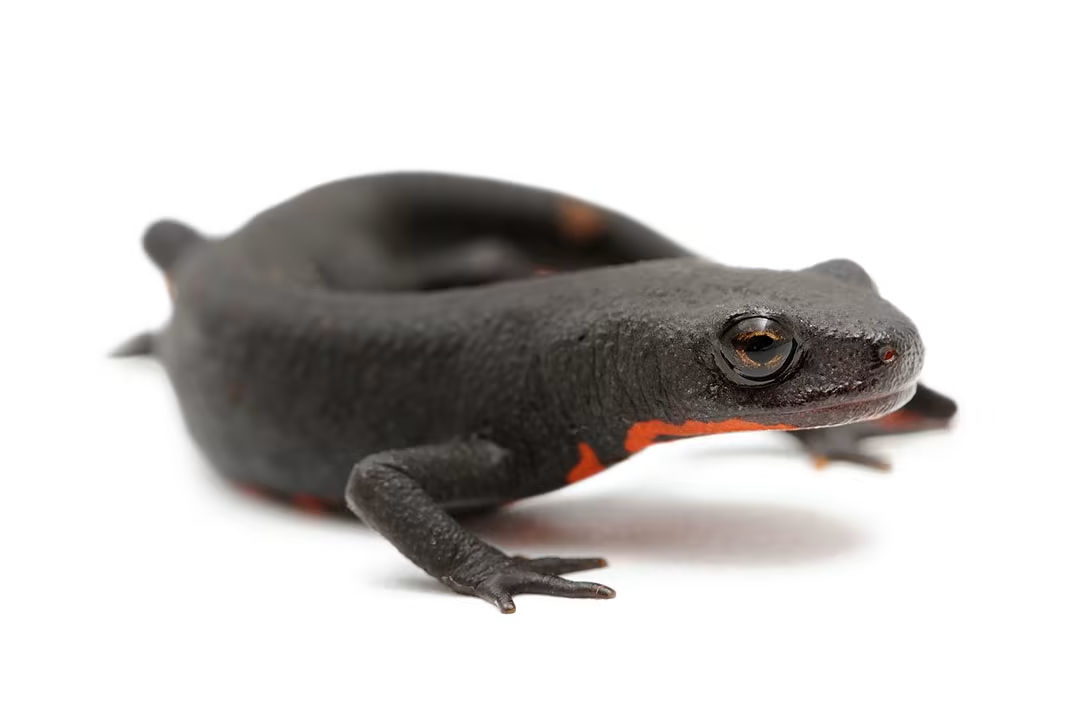
Mastering Pet Salamander & Newt Care: Food, Habitat, Health Guide
Learn How to Care for a Salamander & Newts, recommended diet and habitat setup. Find the right food, supplies and equipment at your neighborhood Petco.
Updated on October 23rd, 2025
- New Pet
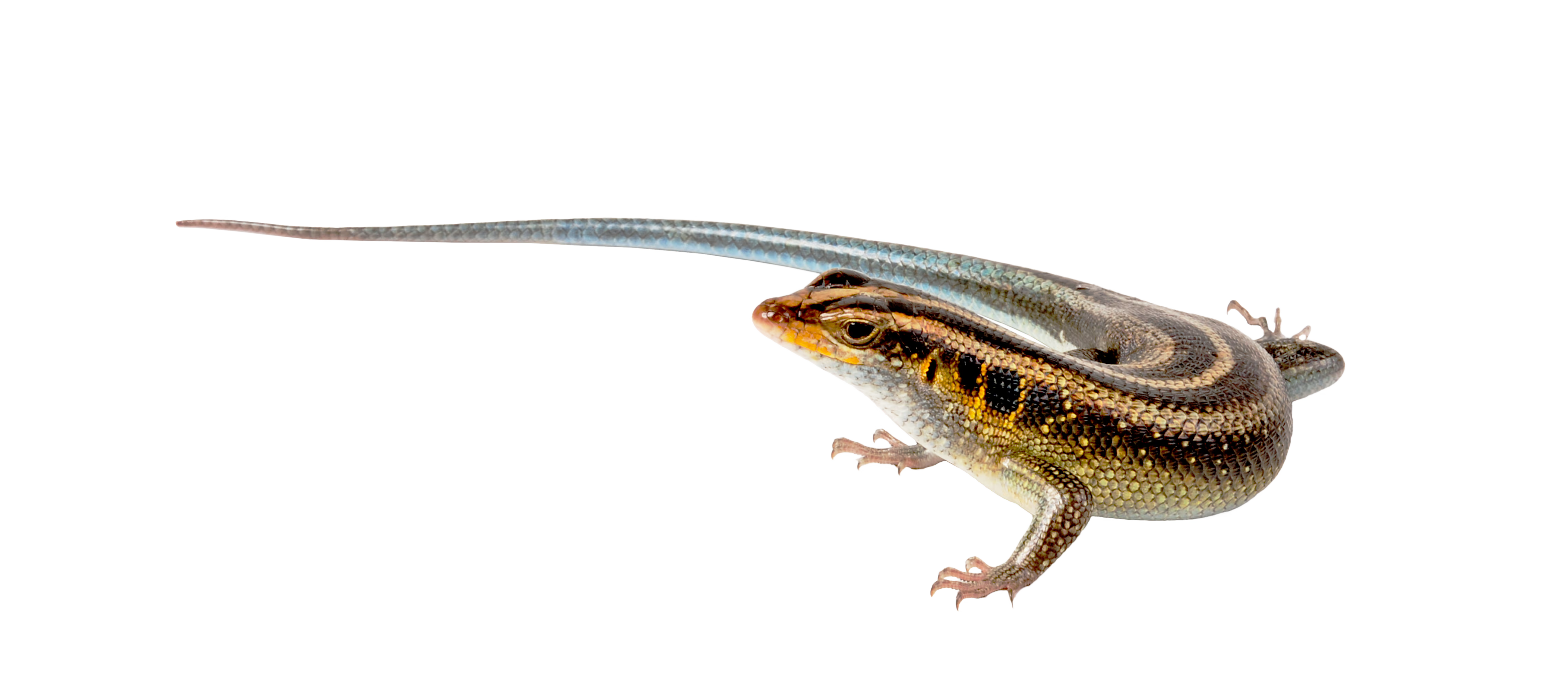
Arid Skink Care: Your Ultimate Guide to Habitat, Food & Health Tips
Learn how to care for an Arid Skink, recommended diet and habitat setup. Find the right food, supplies and equipment at your neighborhood Petco.
Updated on October 23rd, 2025
- New Pet
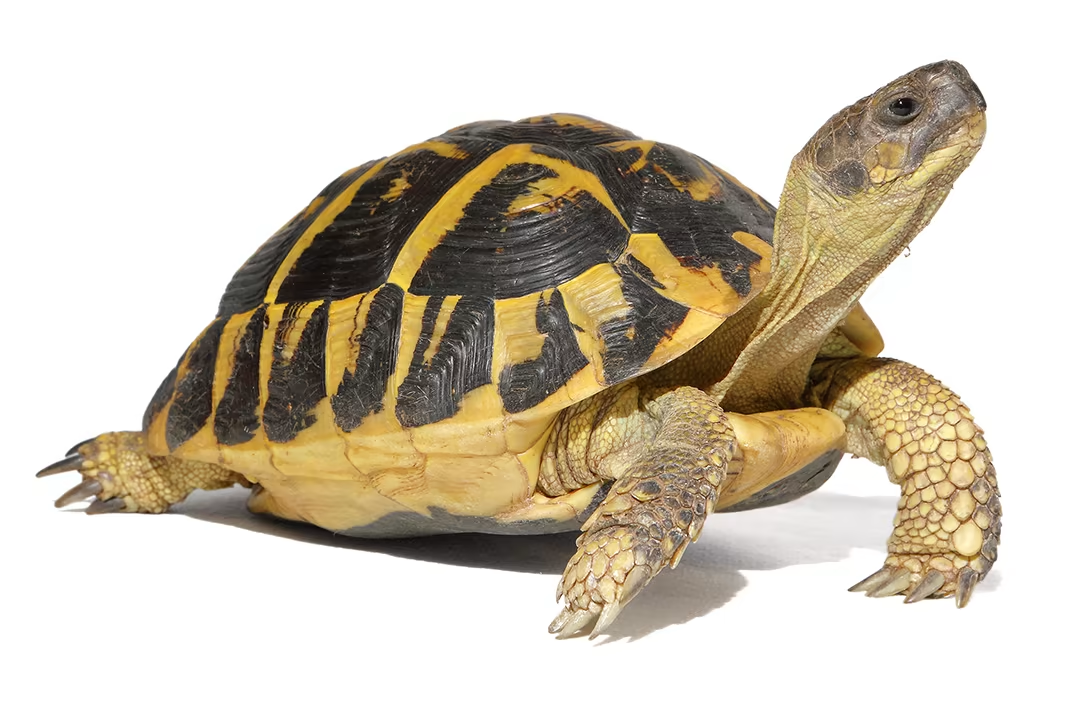
Hermann's Tortoise Care: Ultimate Guide to Habitat, Food & Health
Learn how to take care of your Hermann's Tortoise, tank size, diet & habitat setup. Find the right food, supplies and equipment at your neighborhood Petco.
Updated on October 23rd, 2025
- New Pet
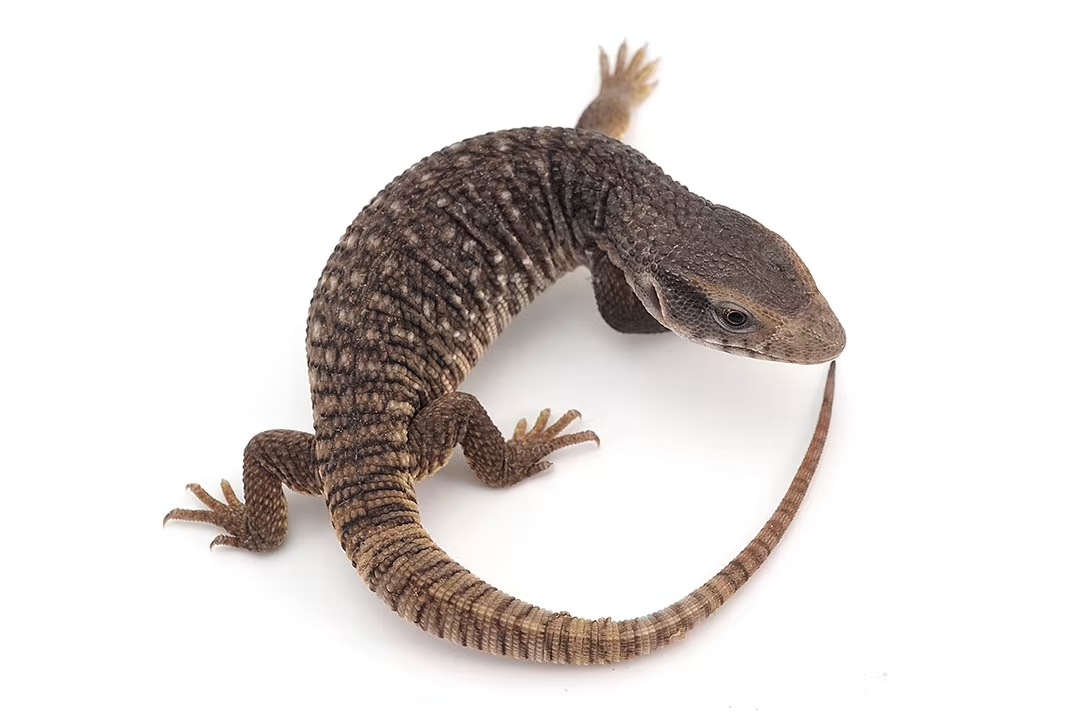
Savannah Monitor & Tegu Care: Setup, Feeding & Health Tips
Learn how to care for a monitor lizard, recommended diet and habitat setup. Find the right food, supplies and equipment at your neighborhood Petco.
Updated on October 23rd, 2025
- New Pet
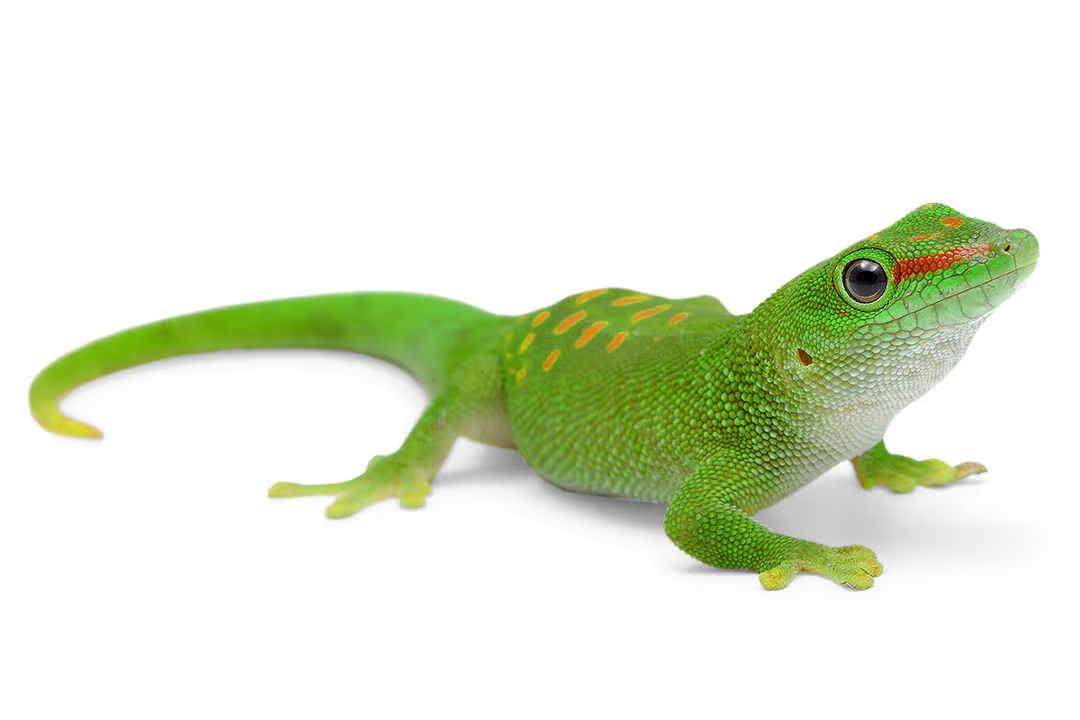
Raise a Thriving Giant Day Gecko: Habitat, Food & Health Guide
Learn how to care for a Giant Day Gecko, recommended diet & habitat setup. Find the right food, supplies & equipment at your neighborhood Petco.
Updated on October 23rd, 2025
- Health & Wellbeing
He isnt eating well and hasnt had the appetite he used to for a long time also he had some nose rub im wondering what could be wrong if its his enclosure or him being stressed from being close to my chameleon or something i need to take him to the ve
Use a background to block his view. This may prevent glass surfing or nose rubbing as well as provide more privacy/security. Again, check the temps in his enclosure to make sure it is species appropriate. Offer a variety of crickets, mealworms, dubia roaches, silkworms and wax worms. Gut load prey for 24 hours prior to offering. Dust appropriately with vitamins and minerals regularly. He may also benefit from a soak in a warm 50/50 solution of water and unflavored PediaLyte. If his appetite does not return after adjustments to environment and diet, have him examined by your veterinarian or a vet experienced in treating reptiles. Submit a stool sample to diagnose intestinal parasites or bacterial overgrowth.
Updated on September 24th, 2025
- Food & Nutrition
Hi! We recently got a juvenile bearded dragon and I just want to make sure i’m doing enough for them. unsure of age or sex. Attached are photos of the dimensions of their enclosure, as well as the description of the bulb we are using. I leave a bowl
Congratulations on your new addition! The tank is sufficient for a juvenile, however you will likely need a larger one when Sonora is fully grown. Make sure Sonora can get into and out of the bowl easily to prevent drowning. Place thermometers in the enclosure to monitor temperature. You will need 3. One at the cool side, one on the warm side and one for the basking spot. Hygrometers can also be used to monitor humidity. You can review care information at the link below. http://www.anapsid.org/bearded.html
Updated on September 24th, 2025
- Health & Wellbeing
My bearded dragon has crust looking stuff in him eye and he just lays around not eating as much and he always has he’s stripes on he’s tummy and he hasn’t got bigger I’ve had him since April
Hi and thank you for using PetCoach, As a first step, please make sure that you are providing Pj with the correct conditions ( e.g. have a look at https://www.petcoach.co/question/?id=411300). However, the bottom line is that Pj needs to be examined by a vet and some lab tests will likely be required before treatment can be recommended.
Updated on September 24th, 2025
- Health & Wellbeing
I keep getting conflicting info on feeding red eared sliders. Some articles say 75% of the diet should be leafy greens ONLY (no fruit unless you want turtle to have diarrhea) and 25% commercial turtle food. (NO "people"food like meat or chicken) This
Thanks for reaching out about Ruby. Meat such as chicken, is a poor food since it is low in calcium and high in phosphorus. My usually recommendation is 1/3-1/3-1/3, meaning parts vegetables (green, red, yellow, orange), pellets and live fish (goldfish, tetras). The benefit of whole live fish is environmental enrichment (hunting, foraging) and has a skeleton with calcium, muscle and organs rich in other nutrients. Vegetables provide a wide variety of vegetables and the pellets a fairly balanced diet. Water temperature, a basking site with UVB and heat and water quality are also important. Good luck.
Updated on September 24th, 2025
- Health & Wellbeing
My dragon Mayu was a little bloated so I gave her a soak and she passed her poop as soon as I put her back and I was a little worried about the way it looked, I feed them bearded dragon smoothie once a week because there fruit just spoiles in there t
That may be due to the smoothie or the soaking providing hydration. You can submit it to your veterinarian to diagnose intestinal parasites if that is a concern. Offer a "spring mix" as well as other dark, leafy greens (collard, mustard, dandelion greens). Vegetables can also be finely chopped and offered. Pumpkin, squash, gourd, carrots, peppers and bok choy are all safe
Updated on September 24th, 2025