Two Easy Ways to Start Earning Rewards!
Become a member today! Members-only pricing and offers, personalized care notifications, Vital Care points back on every purchase and more!
 Become a credit card member today!
Earn 2X Pals Rewards points at Petco
when you use Petco Pay!APPLY NOWLearn More About Petco Pay Benefits
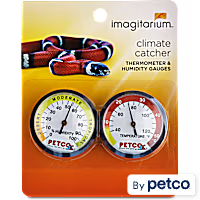
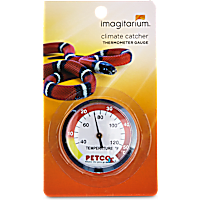
Imagitarium Reptile Habitat Thermometers & Thermostats
Get It Today



Related Searches
Related Articles & Questions
- Seasonal Topics
How to Keep Your Reptiles Cool in Emergencies and Excessive Heat
Whether you temporarily lose access to AC or are experiencing unexpected temperature changes, you can use these tips to keep your reptiles happy and healthy.
Updated on August 14th, 2025
- Care Sheets
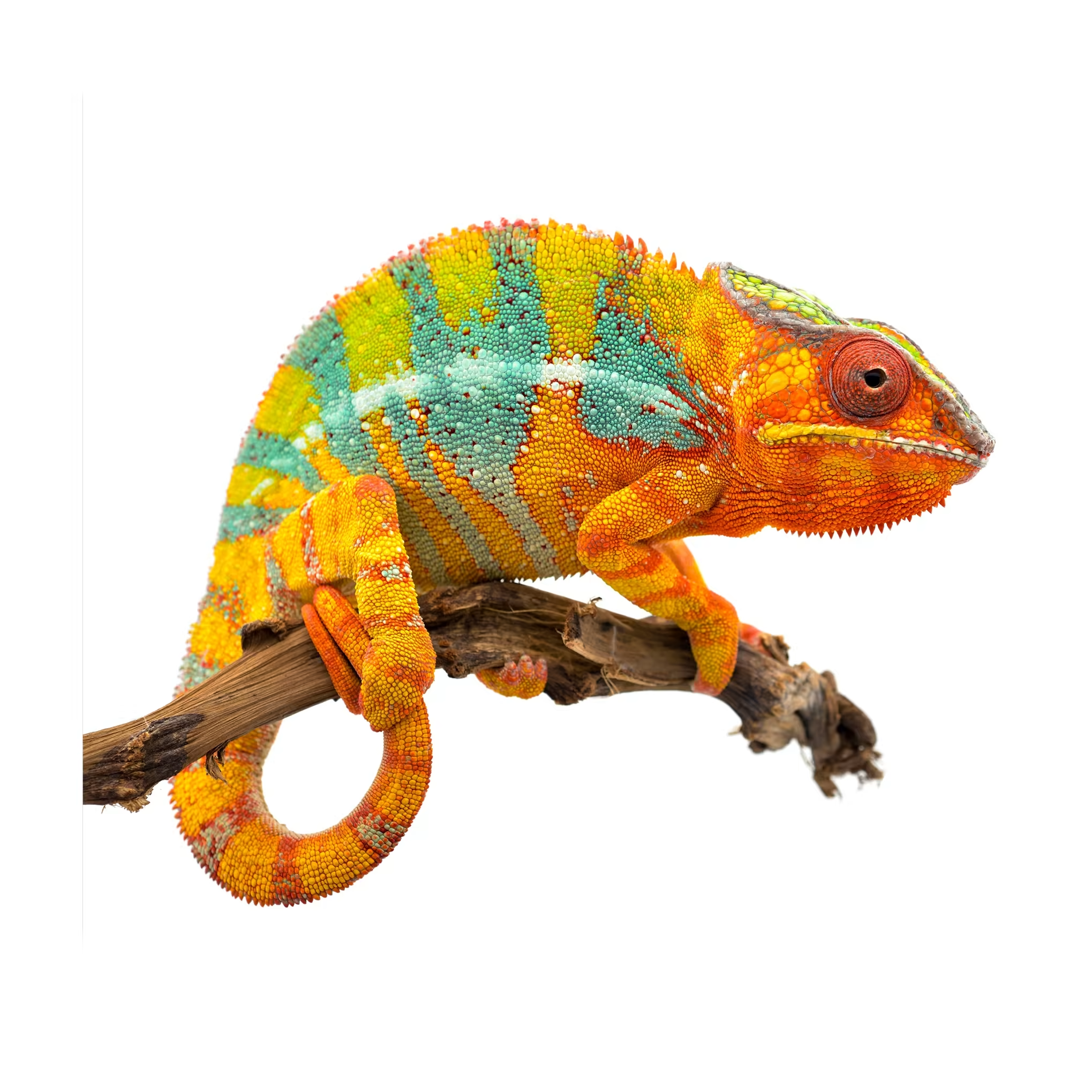
Warm Climate Chameleon Care: Best Food, Habitat & Health Tips
Learn how to care for warm climate Chameleons, recommended diet & habitat setup. Find the right food, supplies & equipment at your neighborhood Petco.
Updated on April 9th, 2026
 Product Guides
Aquarium Heating: Heater Types, Wattage & Setup Tips
There's a wide array of heating solutions to provide the optimal temperature for your aquatic friends to thrive. Dive in to navigate options & ideal wattage.
Updated on July 17th, 2026
- Care Sheets
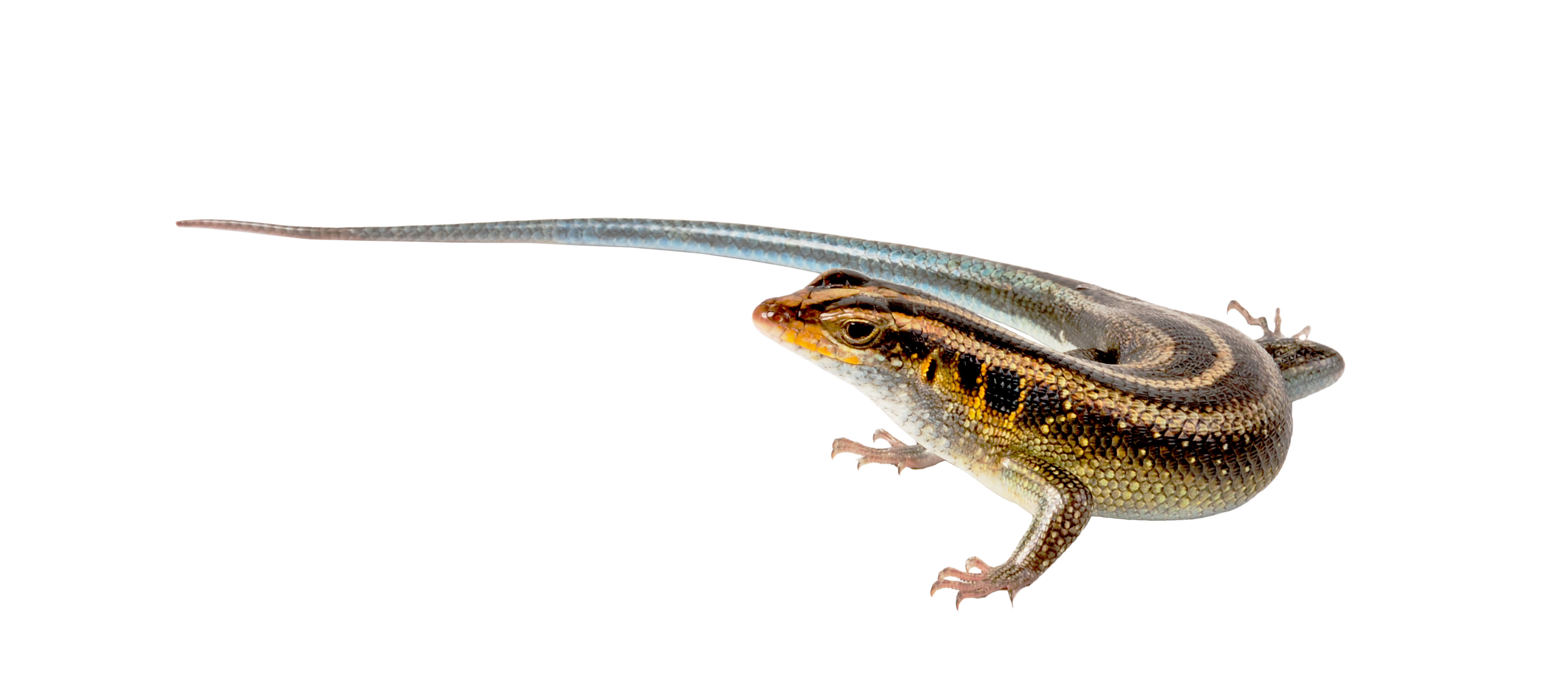
Arid Skink Care: Your Ultimate Guide to Habitat, Food & Health Tips
Learn how to care for an Arid Skink, recommended diet and habitat setup. Find the right food, supplies and equipment at your neighborhood Petco.
Updated on April 9th, 2026
- Care Sheets
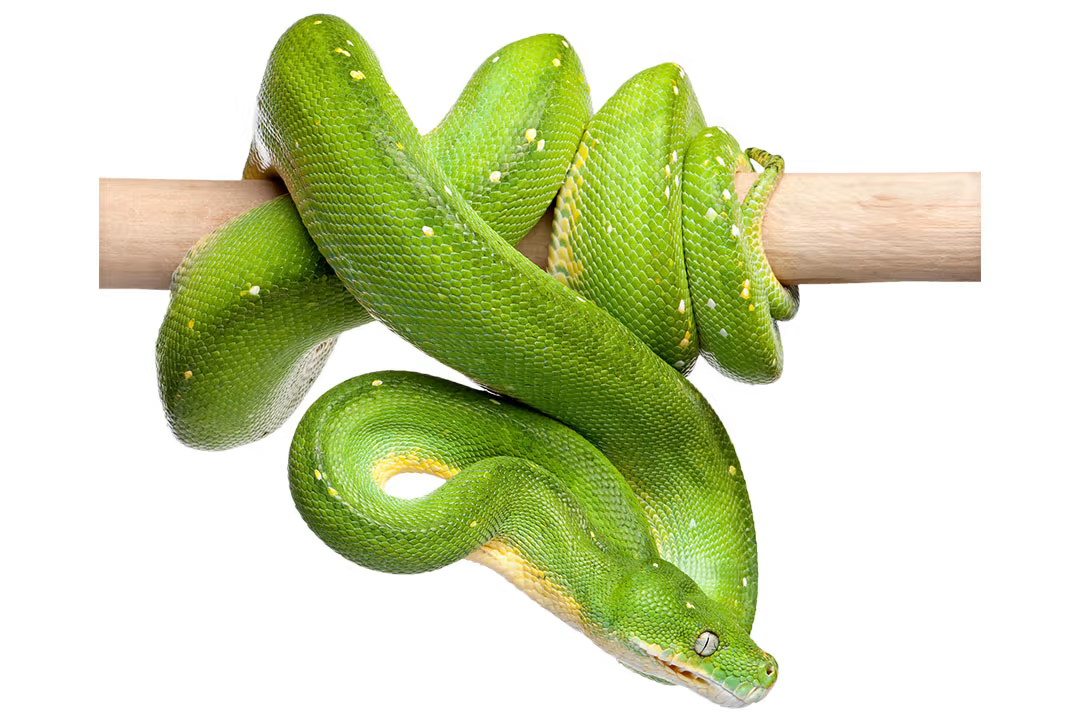
Raise a Healthy Python: Food, Habitat, Health & Handling Tips
Learn how to care for a Python, recommended diet & habitat setup. Find the right food, supplies & equipment at your neighborhood Petco.
Updated on April 9th, 2026
- Health & Wellness
How to tell if my snake is overheating from a new heating mat?
The addition of an under-tank heater can change the temperature of an enclosure significantly. To determine what the temperatures are within Ladon's enclosure, I would recommend utilizing digital thermometers. These should be located on both the warm and cool end of the enclosure, and should be located at Ladon's level (not higher or lower than him). With that information, you can tell if the temperatures are now too hot or not. I would also recommend that you have hides present on both the cool end and on the warm end - this will provide Ladon with choices within his enclosure as well. With the water bowl, this may also be related to his enclosure temperature. I would recommend monitoring for any changes once you have determined if the temperatures are appropriate for his species. You can refer to a care sheet if needed to gather temperature information. I hope that answers your question, and thanks for using Petco Pet Education Center, formerly Petcoach!
Updated on September 24th, 2025
- Vet Q & A
My power is out! How do I keep my pet reptile warm and safe?
Here are some tips on how to care for pets who require continuous heat, such as reptiles and snakes: - Before a power outage, if possible, buy a generator. This will allow you to keep your reptiles warm during the outage. - Amphibians will do okay without heat for a period of time. Try to limit the number of times you open the habitat. - For a heat source, you can go to your local sporting goods store and purchase the heat packs used to warm feet and hands. These can be placed underneath the habitat (just like you would place an electric heating pad). This will allow your reptile to get heat. Do not put the pack into habitat with the reptile. - Another way to warm cold reptiles is to use a pillowcase. Place the reptile gently in the case and place the pillowcase next to your body under your shirt for warmth. - Pillow cases can also be used to transport reptiles if needed. - Do not feed your reptile as they need heat to digest their food. - You can save plastic milk containers and put warm water in them and place in the habitat for warmth. You can heat water on a BBQ grill or your hot water heater. Be careful not to use hot water, as it could burn your reptile. - Be advised that most reptiles will do fine with cooler temperatures; they go into a body slow down, so the temperature change won't hurt them for a short period of time: 24 - 48 hours. - Contact friends that have power and see if you can move your animals to their homes. - It is important to plan ahead of a power outage and have these items on hand to care for your reptiles. Additionally: Usually, IF a reptile needs to be kept warm during a short outage (few days or less), it is recommended that you place them into a small cooler (those little $5 styro ones can work) in a small container. A plastic shoebox or sandwich container can work, with some air holes. Hand warmers, hot water bottles, etc. can be placed into the cooler as well. This will form a very insulated area with a small amount of volume to heat. Be sure there is ventilation provided, though, as the hand warmers can suck oxygen from the air for the chemical reaction. This is a method that can be carried out for a relatively long period of time if necessary, and a digital thermometer with a probe can be placed in with the reptile and monitored from the outside, so you don't have to open the cooler and let out the warmth to check that the heat packs are still working. In all honesty, though, all but the most tropical reptiles can go a few days with temperatures into the 50's or 60's.
Updated on September 24th, 2025
- Home & Habitat
How to warm up a leopard gecko tank when the heat mat isn't enough?
Thanks for reaching out about Sushi. Adding a heat lamp to bring the temperature the rest of the way up is recommended. This should be put on a rheostat so the temperature can be fine tuned. Good luck.
Updated on September 24th, 2025
- Vet Q & A
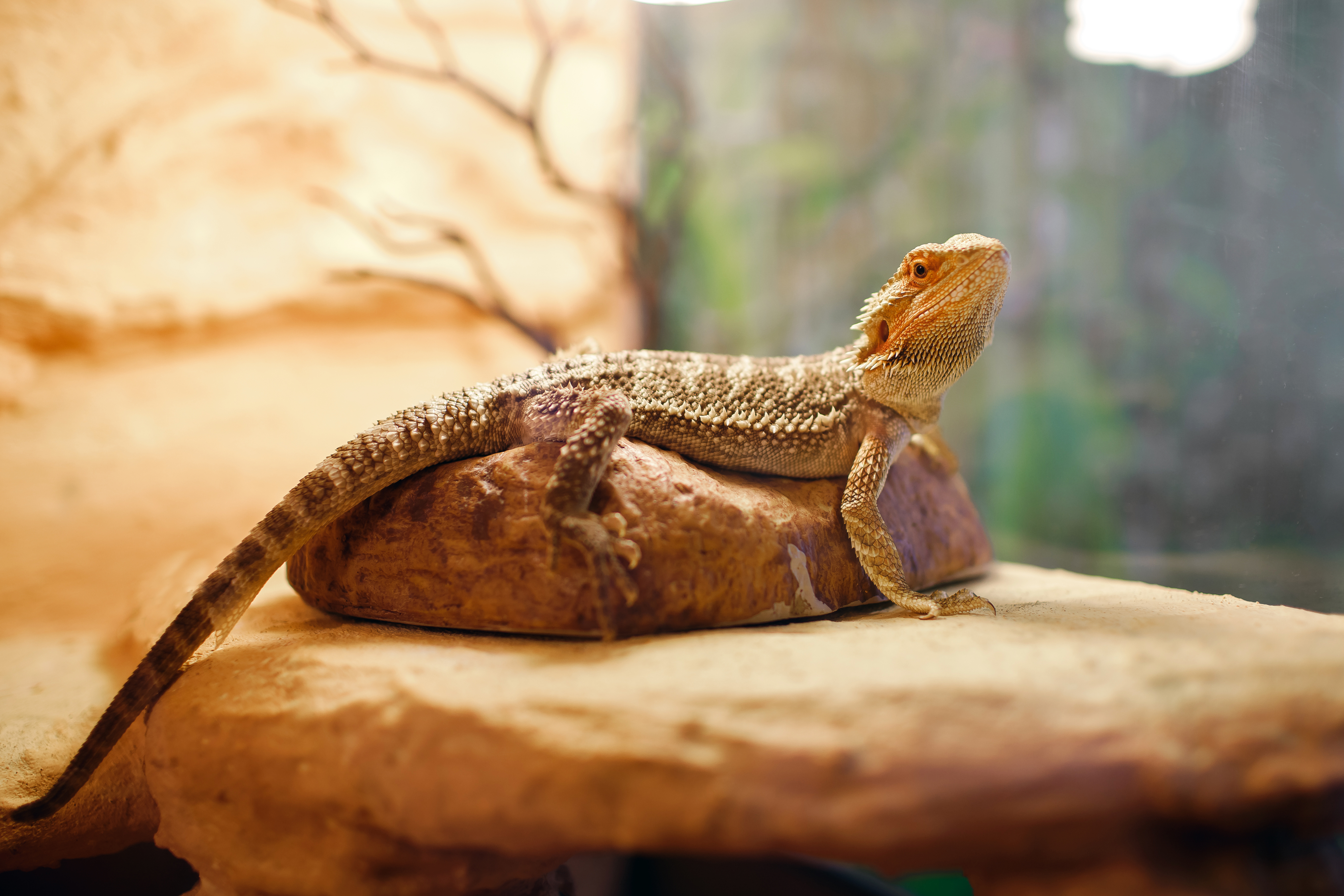
Are heat pads safe for bearded dragons and how should I use them?
Under a surface heat pads are good for helping them thermoregulate. There is only a risk of being burnt if directly exposed to the heat source (i.e. hot rocks). It's important that the heat pad is only under a portion of the enclosure not to exceed 50% of the surface. You always want a cool side of the enclosure and a warm side, so Loki go where is best for him. Make sure the heat pad is not too hot (if it's too hot for your skin, then it's too hot for him). I've found they do well when the heat pad is on a medium, or mild setting depending on the ambient temperature and eclosure. It may take a little experimenting to see what temperature seems best for him. I hope that helps and all is well with Loki.
Updated on September 24th, 2025
- Training & Behavior
My leopard gecko stopped eating, digging. Is 80F tank temp too cold?
Thanks for reaching out about Ruby. The tank needs to be warmed to 95-100 F in the basking area and no place in the tank should drop below 80F at night. UVB spectrum is important as is the proper diet. Anorexia for 3-4 weeks is serious and a veterinary visit is recommended to assess and provide a diagnostic/ treatment plan. Intestinal parasites, infections, malnutrition and others are possible. Good luck.
Updated on September 24th, 2025