Two Easy Ways to Start Earning Rewards!
Become a member today! Members-only pricing and offers, personalized care notifications, Vital Care points back on every purchase and more!
 Become a credit card member today!
Earn 2X Pals Rewards points at Petco
when you use Petco Pay!APPLY NOWLearn More About Petco Pay Benefits
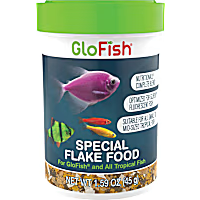
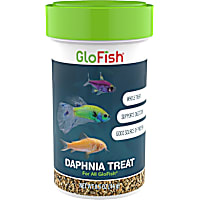
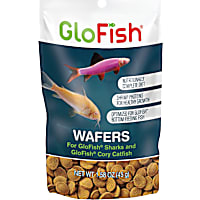
GloFish Freshwater Fish Food
Get It Today




Related Articles & Questions
- Care Sheets
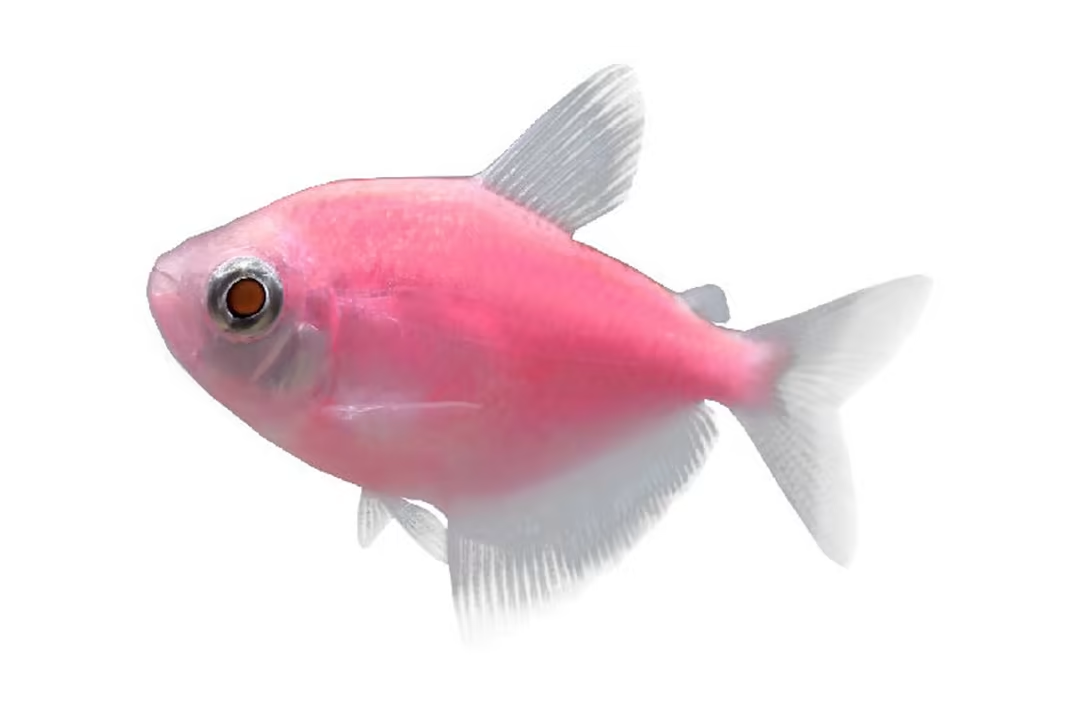
GloFish Care Guide: Tank, Food, & Compatibility for Thriving Fish
GloFish are brilliantly colored and beautiful fish. Learn how to care for GloFish, what to feed them, how long they live, their ideal tank size and more.
Updated on April 9th, 2026
- Food & Nutrition
What Do Small Fish Eat? Freshwater Feeding Guide
Feeding your freshwater fish isn't as simple as adding a pinch of flakes! Read these three tips to learn more about how to provide your pets the nutrition and environment they need.
Updated on July 17th, 2026
- Care Sheets
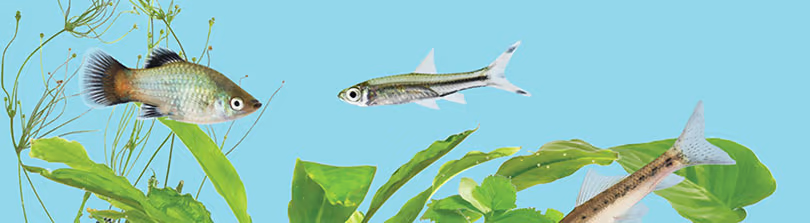
Freshwater Community Fish: Care, Setup & Compatibility Guide
Learn how to care for freshwater community fish, recommended diet & aquarium setup. Find the right food, supplies & equipment at your neighborhood Petco.
Updated on April 9th, 2026
- Care Sheets
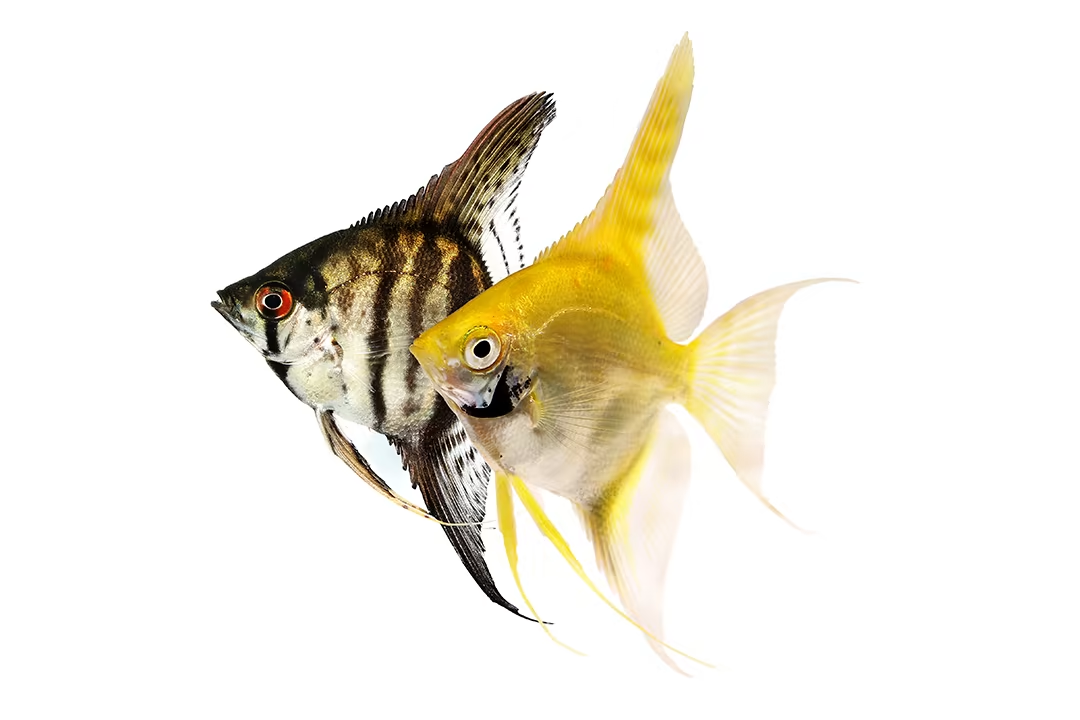
Freshwater Angelfish Care: Tank, Food, & Happy, Healthy Fish
Learn how to care for angelfish, recommended diet and aquarium setup. Find the right food, supplies and equipment at your neighborhood Petco.
Updated on April 9th, 2026
- Care Sheets
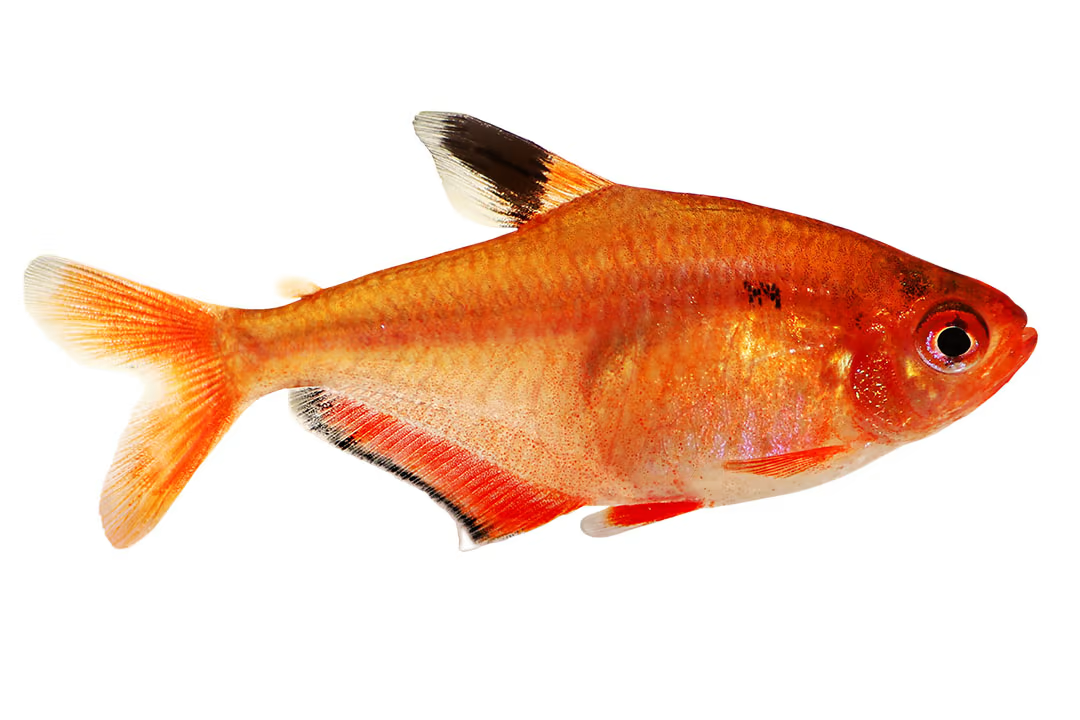
Freshwater Semi-Aggressive Fish: Top Secrets for a Thriving Tank
Learn how to care for semi-aggressive fish, recommended diet & aquarium setup. Find the right food, supplies & equipment at your neighborhood Petco.
Updated on April 9th, 2026
- Food & Nutrition
What's the best food for small fish I found in a freshwater pond?
You can try feeding them commercial fish food or meal works from your local pet store. If you would like a consult, you can provide pictures and we can give you a better idea of what kinds of fish they are and if they have special requirements for their diet. Hope this helps!
Updated on September 24th, 2025
- Vet Q & A
My Glofish is bloated and losing color. Is it a fatal infection?
The bloating could be infection. It may also be parasitic infection, constipation or swim bladder disease. You cannot discount them being gravid (pregnant). Glo fish are egg layers, so they could be females readying to spawn (release eggs). First check water chemistry and quality. Clean water is critical to having healthy fish or to having fish recover from illness or injury. Use a home test kit or submit a water sample for testing. Most pet stores will do this for free or for a small fee. An established tank will have 0 ppm ammonia and nitrites with a nitrate level of 20 ppm or less. If your tank shows any level of ammonia or nitrites, perform a partial water change (no more than 30% total volume at a time) using conditioned water. Makebsurebit is temperature matched as well to prevent stress or shock. Glofish do best between 72 F and 80 F. Once water quality is squared away, fast the fish for 2-3 days, then feed tiny bits of cooked and shelled green peas. This will help with constipation and bloating. Feed peas until they are swimming normally and the bloating is resolved. If the peas don't help, try broad spectrum antibiotic, such as erythromycin or ampicillin. You can find either in the aquarium section of the local Petco. Follow label directions carefully and remove the carbon filter insert during treatment if indicated. An "all in one" product, such as Lifeguard (by Tetra) can also be used. This will treat multiple types of infection with one medication.
Updated on September 24th, 2025
- Food & Nutrition
My new Glofish are hiding and staying at the bottom. Is this normal?
Thanks for your question about your fish, and congratulations on your new family members! I didn't see how recently the tank was set up, but there are a couple of things that could be going on. I would start by checking your water quality - any abnormalities in water quality can make fish have abnormal behaviors, and the water looks a bit murky in the photos you provided. There may be parameters that need to be addressed depending on what you find. If you do not have a water quality kit, they can be purchased at the pet store or an aquarium store, or you can take a sample of your water in for evaluation to these places as well. Some will charge a small fee for this service, just so you are prepared. Also, with recent tank set ups, it can be stressful for fish as they are in a new habitat. I would recommend keeping the light on for only a few hours per day to start, as the bright lights can be shocking for them (since fish don't have eyelids). Gradually you can increase the length of time that the lights are on so that you reach a cycle of 10-12 hours of light and 12-14 hours of darkness for them. I hope this gives you a place to start, and I wish you and your mom the best with the new pets!
Updated on September 24th, 2025
- Food & Nutrition
What fish and supplies are best for a beginner's small tank?
Without anything to use for scale, it is hard for me to tell how big your tank is, but in general it seems very small. Also, the water that is in the tank appears very cloudy right now, so that would be the first place to start. Water quality is very important, and will make or break your ability to house and care for fish. I would recommend getting a good filter system (you can visit a local pet store to assist you with brands in your area, as I am not familiar with what you can get in India). Be sure to bring the measurements (height, length, width) of your tank, or the gallons or liters so they can tell you what capacity of filter you will need. Everything else will depend on what types of fish you get - if you plan on getting multiple fish, they will need to be small - a general rule of thumb is one square inch of fish per gallon of water. Depending on the species you get, you may need to also get a bubbler to ensure there is enough oxygen in the water for them, and you will also likely need to get some sort of substrate for the bottom and cage furniture (different species have different air requirements, and some are secretive and like to hide). You may also need a water heater, depending on the species you would like to house. But, depending on how small your tank is, it may be hard to get a water heater that will fit. The food type will also depend on what species you get, as there can be differences in diet type between species. I hope that gives you a place to start, and good luck!
Updated on September 24th, 2025
- Food & Nutrition
What's the best food for my Rosaline Sharks, Congo Tetras, and Pleco?
The Sharks and Tetras can eat a high quality flake food every day. Brine shrimp (either live or frozen) and blood worms can also be offered. Tetra and Hikari are my own recommendations. The Pleco can eat fresh greens or vegetables. Remove any uneaten food after 24 hours to prevent fouling the water. Sinking wafers or pellets can also be offered.
Updated on September 24th, 2025