Two Easy Ways to Start Earning Rewards!
Become a member today! Members-only pricing and offers, personalized care notifications, Vital Care points back on every purchase and more!
 Become a credit card member today!
Earn 2X Pals Rewards points at Petco
when you use Petco Pay!APPLY NOWLearn More About Petco Pay Benefits
Coralife Aquarium Maintenance
Get It Today


Related Articles & Questions
- New Pet
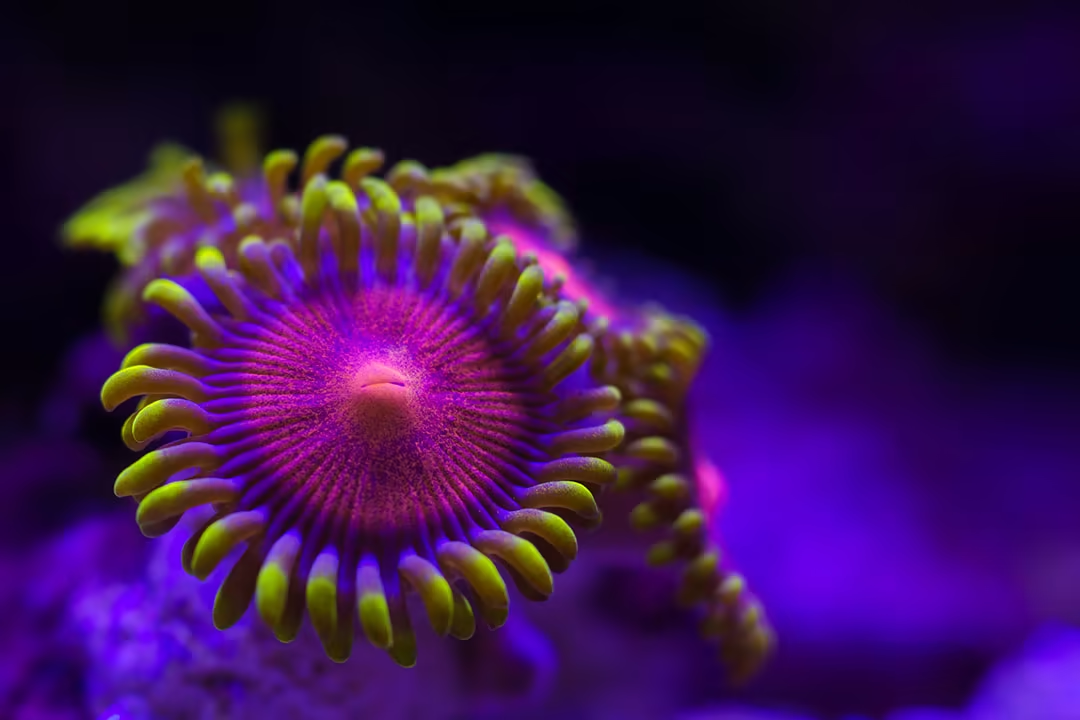
Mastering Soft Coral Care: Setup, Feeding, & Water for a Healthy Reef
Learn how to care for soft coral, recommended care & habitat setup. Find the right food, supplies & equipment at your neighborhood Petco.
Updated on November 13th, 2025
- New Pet
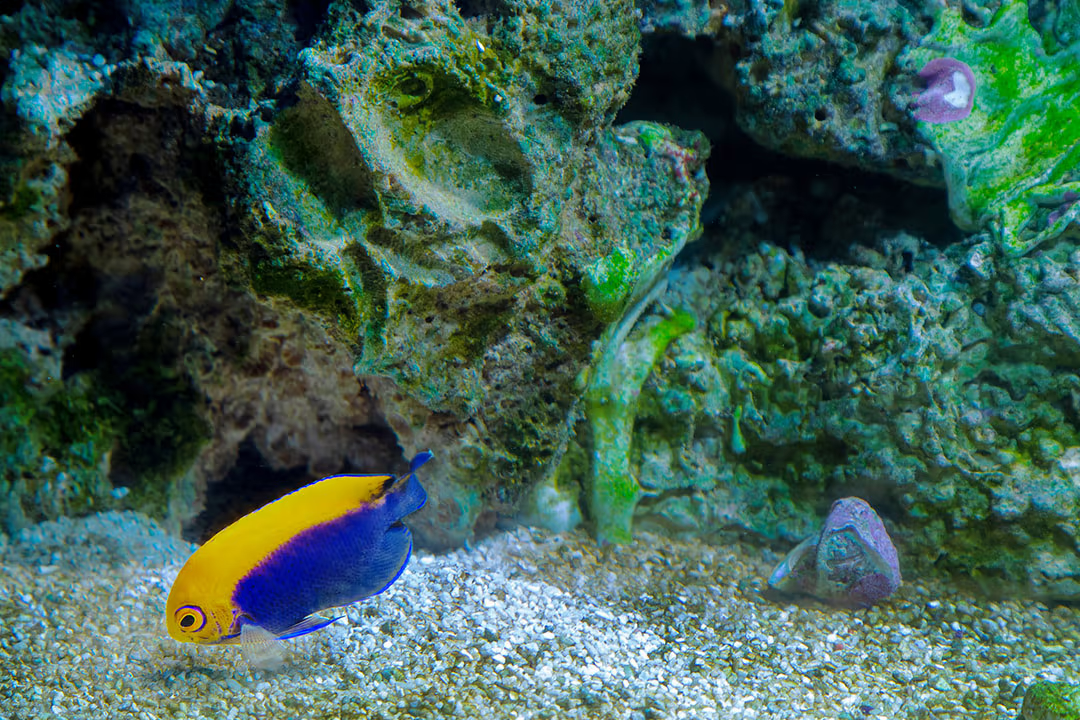
Your FOWLR Marine Tank: Easy Setup Guide for Live Rock Fish
Learn how to care for Marine FOWLR Aquariums. These tanks have easier upkeep and require less testing and supplementation than a reef tank. You can keep many fish who would generally consume corals and invertebrates, making it a popular setup choice for more aggressive fish.
Updated on November 13th, 2025
- New Pet
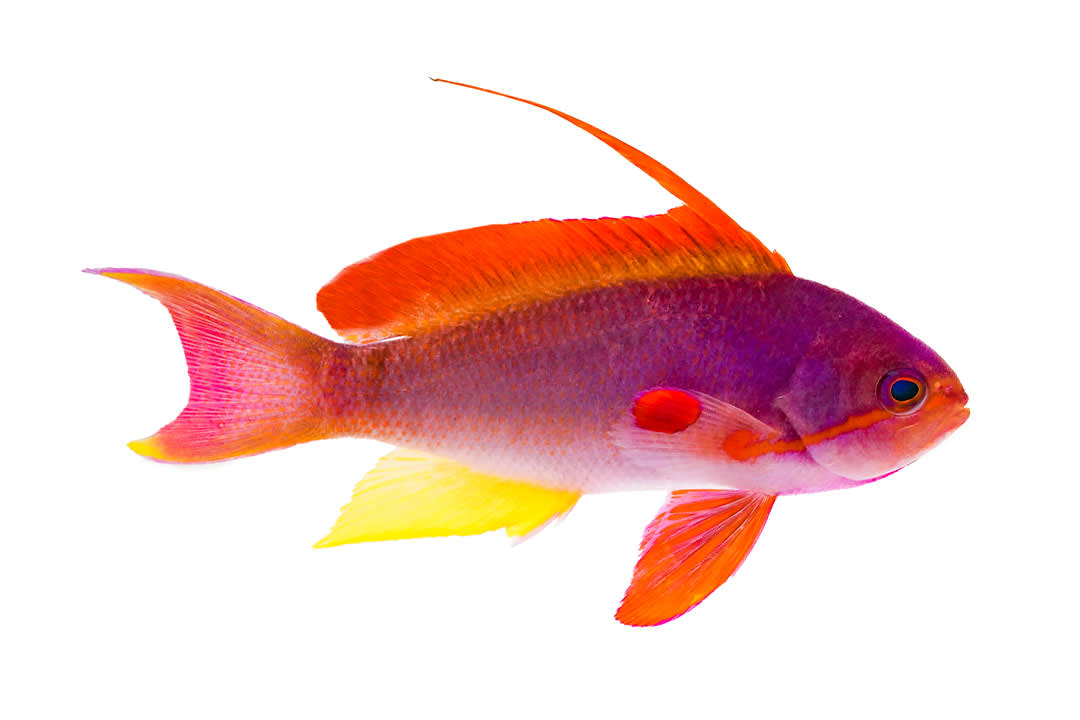
Anthias Care: Set Up a Thriving Tank for Vibrant, Healthy Fish
Learn how to take care of Anthias, recommended diet and tank setup. Find the right food, supplies and equipment at your neighborhood Petco.
Updated on November 13th, 2025
- New Pet
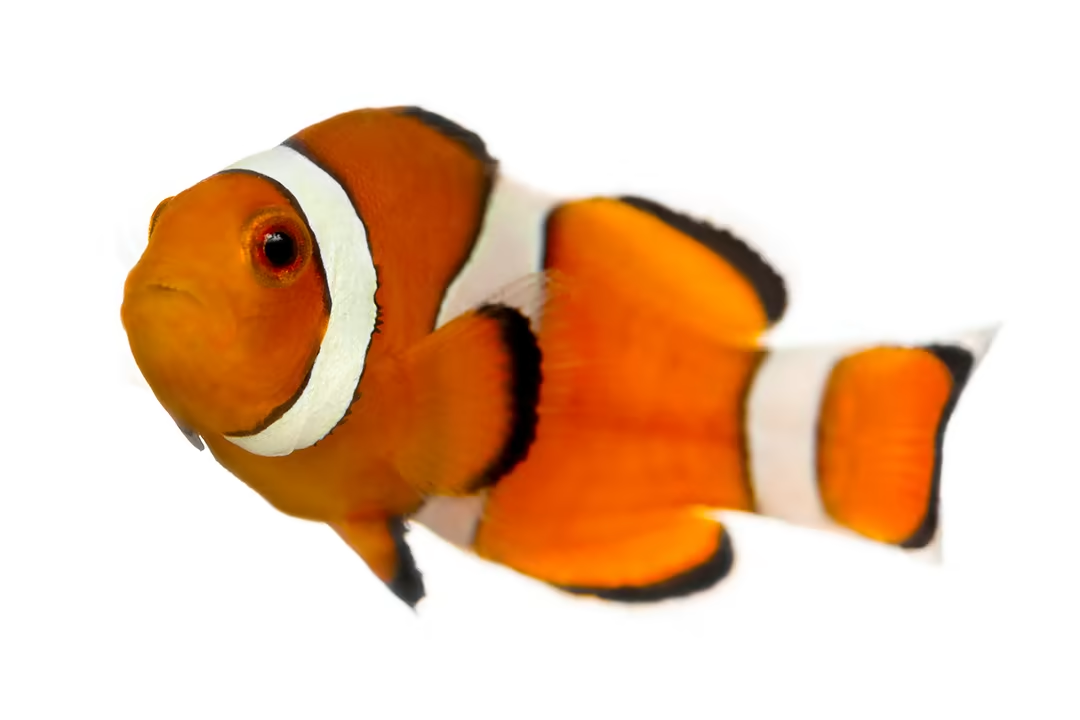
Clownfish Care: Your Easy Guide to Tank Setup, Food & Compatibility
Learn how to care for a Clownfish, recommended diet and aquarium setup. Find Clownfish for sale, supplies and equipment at your neighborhood Petco.
Updated on November 13th, 2025
- New Pet
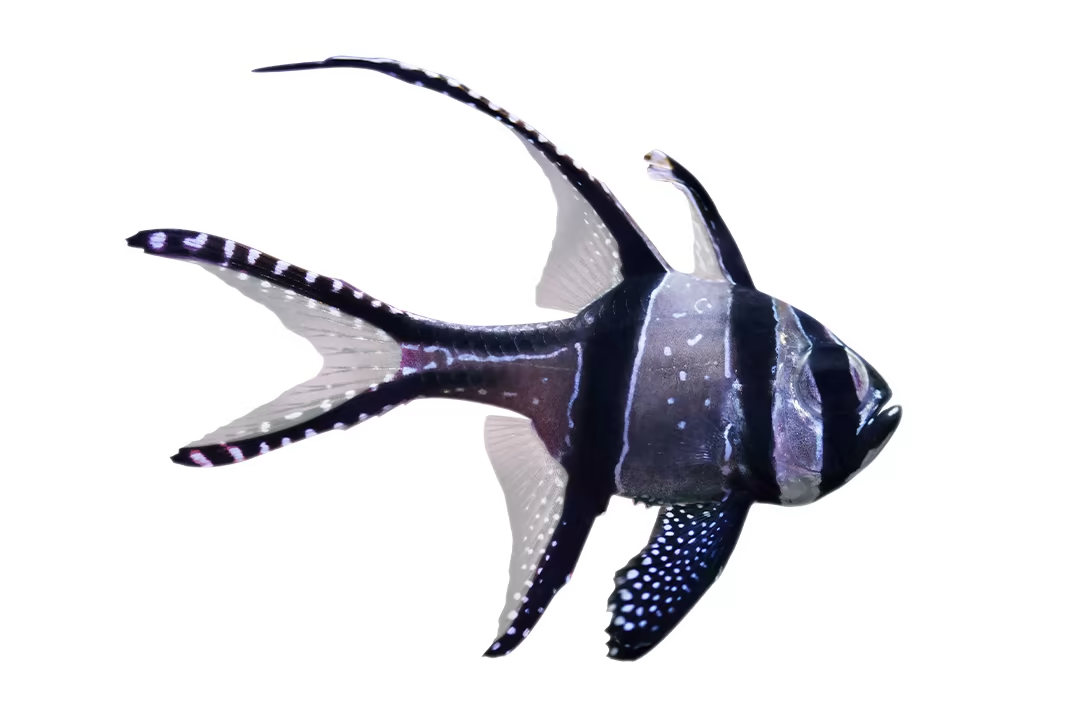
Cardinalfish Care for Beginners: Tank Setup, Feeding, & Habitat Tips
Learn how to care for cardinal fish, recommended diet & aquarium setup. Find the right food, supplies & equipment at your neighborhood Petco.
Updated on November 13th, 2025
- Health & Wellbeing
I have basic aquarium at home, since 2 days all are not active and seen abnormal, shark, gold, koi are all having bleeding on their body without any reason i know. Suddenly at one time continuously fishes getting die, even I changed water at overnigh
I'm sorry you are having difficulties with your aquarium. There are several issues that should be dealt with right now. They are water chemistry, aquarium size and choice/number of fish. Any new aquarium should be set up and, ideally, run empty for several weeks (usually 4-6 weeks). This is so beneficial bacteria have an opportunity to populate the substrate and filter. These bacteria are necessary to break down wastes that fish will produce. The technical phrase for this is "establishing the Nitrogen cycle". These bacteria will break down wastes into ammonia then nitrites then nitrates. Nitrates can then dissipate or be absorbed/used by live plants. In high enough concentrations, ammonia and nitrites are toxic and can kill fish. Cycling a tank with fish is possible but it increases the risk of loss. Water chemistry should be checked every few days using a liquid home test kit. A water sample can be submitted for testing , but is not as convenient as testing yourself. Most pet sto
Updated on August 12th, 2025
- Health & Wellbeing
Hello... I would like to offer filtration coaching for fish questions. Can I answer questions on this forum?
You should contact by email the administrators of the website (you can find general email on the contact section) and they put you in touch with the Head Vet in charge of hiring new experts. Best of luck and hope to see you joining the team soon. Dr. Orioles
Updated on August 12th, 2025
- Health & Wellbeing
I got a fish from the fair. Its orange, gender unknown. What do I feed it for the meantime, and how do I take care of it so it doesn't die. It's current habitat is a plastic bowl with a lid, probably the size of the ones people get at petsmart. Pleas
It sounds like you need to take a trip to your local pet store. The clerks there can help you pick out an appropriately size tank with proper filtration and heating that can help keep Sushi healthy. They can also let you know what water treatments you'll need for the water in your area, as well as test any water you bring it to see if it is OK for Sushi to live in. Pet stores will also carry commercial goldfish food which is a balanced diet that is given to them. It should have feeding instructions on it so you know how much is appropriate to give to Sushi.
Updated on August 12th, 2025
- Health & Wellbeing
My new glofish shark has long, white, stringy poop hanging off its body. I may have overfed him his glofish flakes. Is he constipated or stressed from being in a new tank? I treated the water with Aqua SafeStart and EasyBalance. What can I do to get
He may have internal parasites. maintain pristine water quality and confirm stable water chemistry. This can be done by using a home test kit or by submitting a water sample for testing. The local Petco may do this for free or for a small fee. Perform a partial water change, no more than 30% total volume at a time, if indicated. use only conditioned water that is temperature matched to prevent further stress or shock. Check the water temperature as well, since low temps can affect activity, appetite and digestion in fish. Anywhere between 72 F and 80 F is acceptable. Keeping it at the higher end may aid in digestion and defecation. Consider a broad spectrum parasite medication. You can find one in the Aquarium section at the local Petco. Follow label directions carefully and remove the carbon filter insert during treatment if indicated.
Updated on August 12th, 2025
- Health & Wellbeing
My fish have white fuzz all over their bodies. I have been treating them since Monday and it keeps spreading am I treating them the wrong way? Is there more I should be doing.
Maintain pristine water quality. This is the foundation of treatment. It will require partial water changes every few days and a complete cleaning of the substrate (if any) and any tank furniture. I see you have frogs, which can make treatment trickier. In tanks without amphibians or scaleless fish, plain aquarium salt (NOT table or Epsom salt) can be used at 1 tablespoon per 5 gallons of water for 14 days. You can remove the frog(s) and treat them separately if you want to use salt. The Pimafix, or Melafix also, can be used in conjunction with salt.
Updated on August 12th, 2025